This post may contain affiliate links, which means I may earn a small commission at no extra cost to you. This post is not sponsored. I only recommend products I have personally used and trust.
If your toddler suddenly decided that anything green on their plate is the enemy, I want you to know two things. First, you are not doing anything wrong. Second, a smoothie with a fun straw might be the easiest win you get all week.
As a mom of five, I have fed my share of picky toddlers. Some days they eat everything in sight. Other days they live on crackers and air. Smoothies have been one of my most reliable tools through all of it, because a toddler who won't touch a spinach leaf will happily drink a bright green "monkey smoothie" through a straw.
Below are my 10 easy toddler smoothie recipes. Every one of them has fruit, most have a hidden vegetable, and none of them have added sugar. I'm also sharing the blenders I use and the toddler smoothie cups that have survived real life at my house.
Save this for later: pin the recipe card at the bottom of this post so you have all 10 recipes in one place.
Why Smoothies Work So Well for Toddlers
Toddlers want control, and they love anything that feels like a "big kid" treat. A smoothie gives them both. They get to hold their own cup, sip through a straw and feel independent, while you quietly pack in fruit, vegetables, protein and healthy fat.
Here's why I keep coming back to them:
Hidden veggies actually get eaten. Spinach, carrots, beets, cauliflower, zucchini, sweet potato, squash and pumpkin all disappear into a sweet, fruity smoothie.
They're fast. Most of these recipes take under five minutes, which matters when you have a hungry toddler clinging to your leg.
They're flexible. Smoothies work for breakfast, an afternoon snack, or a cool treat after daycare pickup.
They build familiarity. Every time your toddler enjoys a smoothie with spinach in it, you can tell them so. Over time, that helps "spinach" feel safe instead of scary.
My Ground Rules for Healthy Toddler Smoothies
These are the guidelines I follow every time I make a smoothie for my little ones.
No added sugar. The American Academy of Pediatrics recommends avoiding added sugars for children under 2. Ripe bananas, mango, pear and berries bring all the sweetness these recipes need, so you will never see honey, syrup or juice on this list.
Use whole milk or plain yogurt. For toddlers 12 to 24 months, the AAP recommends whole milk, about 16 ounces (2 cups) a day. A smoothie made with milk or yogurt counts toward that total, so keep it in mind for the rest of the day. If your family is dairy-free, unsweetened soy milk is the plant milk the AAP considers nutritionally comparable to cow's milk.
Cook the tougher veggies first. Carrots, beets, sweet potato, squash and cauliflower blend much smoother, and are easier on little tummies, when they're steamed or roasted first. I steam a batch, let it cool, and freeze it in portions so it's ready to go.
Keep portions small. Each recipe below makes about two toddler-size servings. That's roughly 4 to 6 ounces per child, which is plenty for little bellies. Offer it alongside a meal or as a snack, not as a replacement for every meal.
Blend until completely smooth. Toddlers can be sensitive to texture, and a chunk of spinach in a straw is a quick way to lose your audience. Blend longer than you think you need to.
Introduce allergens thoughtfully. A couple of these recipes include peanut butter or almond butter. If your toddler hasn't had these foods yet, talk with your pediatrician about how and when to introduce them.
I'm a mom, not a doctor or dietitian. Always check with your pediatrician about your own child's nutrition needs.
The Gear I Personally Recommend
You don't need anything fancy to make toddler smoothies. But the right blender and the right cup make the whole thing faster, less messy, and much more likely to become a habit.
My Favorite Full-Size Blender: Ninja Professional Blender (BL610)
The Ninja Professional Blender (BL610) is one of Amazon's most popular full-size blenders. It's the one I recommend to moms who want a powerful blender that doesn't cost a fortune.
1000 watts of power that crushes frozen fruit and ice with no trouble
72-ounce pitcher, big enough to make smoothies for the whole family at once
Dishwasher-safe pitcher, lid and blades, which is non-negotiable for me with five kids
Simple controls, so there's no learning curve on a busy morning
I love this blender for batch days. I can blend a big pitcher, pour the toddler portions, and freeze the rest as smoothie popsicles. The one thing to know is that it likes a little extra liquid, so add an extra splash of milk if your smoothie isn't moving.
Even Easier (and Portable): Ninja Blast Portable Blender
If you want the fastest possible cleanup, the Ninja Blast Portable Blender is a game changer. You blend right in the cup, so there's no pitcher to wash.
Cordless and USB-C rechargeable, so you can blend in the car, at the park, or at your desk
18-ounce vessel, the perfect size for a toddler smoothie plus one for mom
Crushes frozen fruit and ice
BPA-free, dishwasher-safe lid and vessel
One-handed sip lid and carry handle, which every mom holding a toddler on one hip will appreciate
This is the blender I'd grab for a single-serve smoothie on a busy morning. It's also great for daycare drop-off days when breakfast has to happen on the go.
The Best Toddler Smoothie Cups with Lids and Straws
A toddler smoothie cup needs a lid, a straw wide enough for a thick smoothie, and materials you feel good about. It also has to go in the dishwasher, because no one has time to hand-wash cups at 9pm. These are my picks.
Elk and Friends Stainless Steel Cups with Silicone Sleeves and Straws. These 10-ounce stainless steel smoothie cups are my top pick for toddlers. They're break-proof when they inevitably get thrown off the high chair. The food-grade silicone sleeves give little hands a good grip, and the lids are BPA-free. They're dishwasher-safe and freezer-safe, so you can even pre-pour smoothies and freeze them.
WeeSprout Silicone Cups with Straws and Lids. For younger toddlers who are still learning to drink from a straw, these soft silicone cups are a great starter option. They come in 4-ounce and 8-ounce sizes and are made of food-grade silicone. The soft straws are wide enough for thicker drinks, and the cups are dishwasher-safe (top rack). They have measurement markings and a fill line, which makes portioning easy. The lids are spill-resistant, not spill-proof, so don't overfill them.
10 Easy Toddler Smoothie Recipes
Each recipe makes 2 toddler-size servings. The method is the same for all of them: add the liquid to the blender first, then the soft ingredients, then anything frozen. Blend until completely smooth. If it's too thick for a straw, add a splash more milk. If it's too thin, add a few frozen fruit pieces.
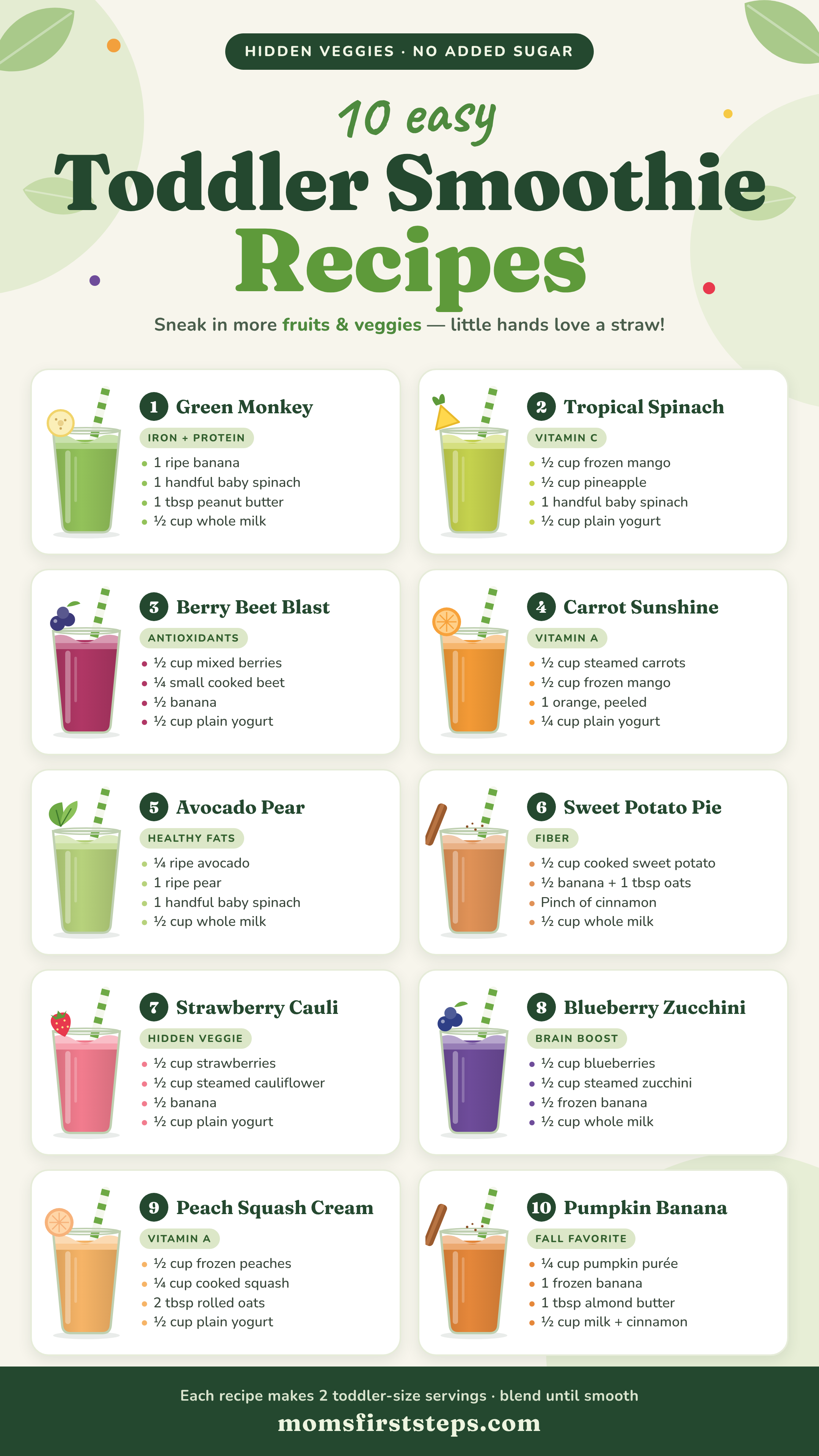
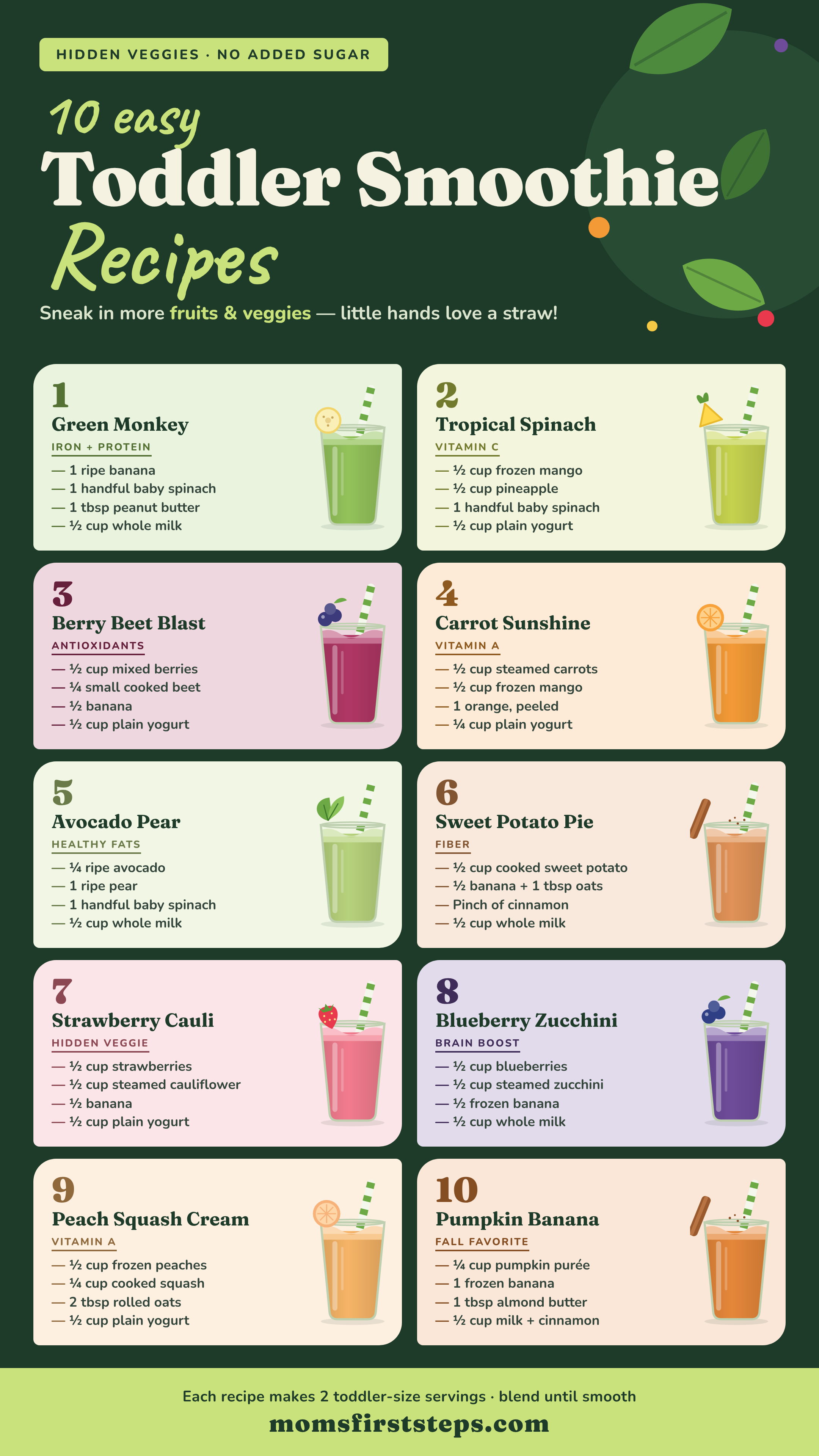
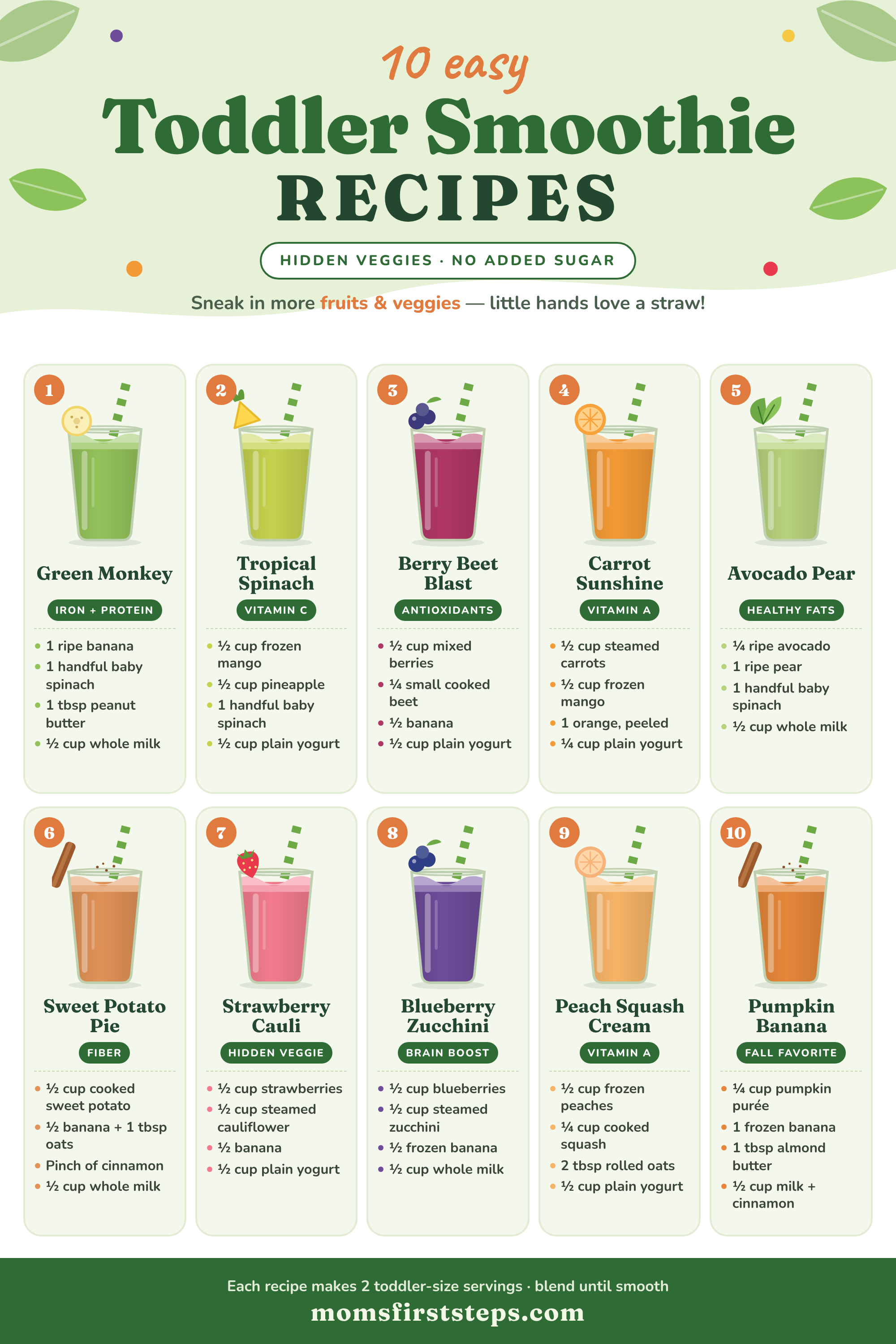
1. Green Monkey
Iron + Protein
1 ripe banana
1 handful baby spinach
1 tbsp peanut butter
½ cup whole milk
This is the smoothie I recommend starting with. The banana and peanut butter taste like a treat, and the spinach completely disappears. Call it a "monkey smoothie" and watch your toddler ask for it by name.
2. Tropical Spinach
Vitamin C
½ cup frozen mango
½ cup pineapple
1 handful baby spinach
½ cup plain yogurt
Mango and pineapple are so sweet and bright that no one notices the greens. Plain yogurt adds creaminess and protein without any added sugar, so skip the flavored kinds.
3. Berry Beet Blast
Antioxidants
½ cup mixed berries
¼ small cooked beet
½ banana
½ cup plain yogurt
The color on this one is gorgeous, and toddlers love a "pink" or "purple" smoothie. A small piece of cooked beet adds earthy sweetness and makes the color pop. Pre-cooked, vacuum-packed beets from the produce section make this one easy.
Heads up: beets can temporarily turn diapers and potty contents pink or red. It's harmless, but it's good to know before it surprises you.
4. Carrot Sunshine
Vitamin A
½ cup steamed carrots
½ cup frozen mango
1 orange, peeled
¼ cup plain yogurt
This bright orange smoothie tastes like a creamsicle. Steaming the carrots first is the key to a silky texture with no gritty bits. A whole peeled orange gives you all the fiber that juice leaves behind.
5. Avocado Pear
Healthy Fats
¼ ripe avocado
1 ripe pear
1 handful baby spinach
½ cup whole milk
Avocado gives this smoothie a thick, milkshake-like texture plus healthy fats for growing brains. Use a very ripe pear for the best natural sweetness.
6. Sweet Potato Pie
Fiber
½ cup cooked sweet potato
½ banana + 1 tbsp oats
Pinch of cinnamon
½ cup whole milk
This one tastes like dessert. Leftover baked sweet potato works perfectly, and the oats make it filling enough to count as breakfast. A pinch of cinnamon gives it that cozy pie flavor without any sugar.
7. Strawberry Cauli
Hidden Veggie
½ cup strawberries
½ cup steamed cauliflower
½ banana
½ cup plain yogurt
Cauliflower is the ultimate hidden veggie. It has almost no flavor once it's blended with strawberries, and it makes the smoothie extra creamy. Steam it, cool it, and freeze it in portions for the thickest, frostiest result.
8. Blueberry Zucchini
Brain Boost
½ cup blueberries
½ cup steamed zucchini
½ frozen banana
½ cup whole milk
Blueberries turn this smoothie a deep purple, which completely hides the zucchini. Peel the zucchini before steaming if your toddler is sensitive to green flecks.
9. Peach Squash Cream
Vitamin A
½ cup frozen peaches
¼ cup cooked squash
2 tbsp rolled oats
½ cup plain yogurt
Butternut squash and peaches blend into a creamy, peaches-and-cream smoothie. Frozen butternut squash cubes from the freezer aisle, steamed and cooled, make this one easy to keep on hand.
10. Pumpkin Banana
Fall Favorite
¼ cup pumpkin purée
1 frozen banana
1 tbsp almond butter
½ cup milk + cinnamon
This is my favorite for fall. Use 100% pure pumpkin purée, not pumpkin pie filling, which has added sugar. Freeze any leftover purée in ice cube trays so you have perfect portions for next time.
My Best Tips for Smoothie Success
Make freezer smoothie packs. Once a week, I portion the fruit, veggies and add-ins for each recipe into freezer bags. On busy mornings, I dump one bag into the blender, add milk or yogurt, and blend. It's one of the simplest ways I've found to keep healthy food easy as a working mom.
Turn leftovers into popsicles. Pour any extra smoothie into popsicle molds and freeze. Smoothie pops are a lifesaver for teething toddlers and hot summer afternoons, and nothing goes to waste.
Let your toddler help. Toddlers are far more likely to try something they helped make. Let them drop the spinach into the blender, press the button (with your hand on top), or pick which color smoothie to make today.
Name the veggies out loud. I'm a big believer in hiding veggies for nutrition, not hiding them forever. Saying "this green smoothie has spinach in it!" builds a positive connection, so your toddler is more open to spinach on the plate later.
Don't make smoothies the only veggie. Smoothies are a wonderful bonus, but keep offering veggies at meals too. Toddlers learn to eat foods by seeing and touching them again and again.
Rotate the recipes. Rotating through all 10 recipes gives your toddler a wider range of nutrients and flavors, and it keeps smoothie time from getting boring.
Toddler Smoothie FAQs
What age can toddlers start drinking smoothies? These recipes are written for toddlers 12 months and up. The AAP recommends no cow's milk as a drink before 12 months. If you're making smoothies for a younger baby, talk with your pediatrician and swap in breast milk or formula.
Can I make toddler smoothies ahead of time? Yes. Smoothies are best fresh, but you can store one in a covered cup in the fridge for up to 24 hours. Give it a good shake before serving. For longer storage, freeze smoothie packs or pour leftovers into popsicle molds.
How much smoothie should a toddler drink? About 4 to 6 ounces is a good toddler-size serving, and that's what each recipe here is portioned for. Remember that the milk and yogurt count toward your toddler's daily dairy.
My toddler won't drink a green smoothie. What now? Start with a color they already love. Berry Beet Blast and Blueberry Zucchini are bright pink and purple, so the veggies are completely hidden. Serving it in a fun cup with a straw helps more than you'd think.
Can I use frozen vegetables? Absolutely. Frozen cauliflower, butternut squash, carrots and zucchini are budget-friendly and convenient. Steam them first, let them cool, then freeze in portions for the smoothest blend.
From One Mama to Another
Feeding a toddler can feel like a daily negotiation, and it's easy to feel like you're failing when they push their veggies away. You're not. Picky eating is a normal stage, and small wins add up.
Pick one recipe to try this week. I'd start with the Green Monkey. Let your little one help you make it, hand them a fun cup with a straw, and celebrate when they drink it all.
Which smoothie are you trying first? Let me know in the comments. And don't forget to pin this post so you have all 10 recipes ready the next time you need a quick, healthy win.