There's something magical about experiencing your baby's first spring. As a mom of 5, I've watched those tiny newborn moments slip away like cherry blossoms in the wind. Here’s the truth: research shows that parents’ memories of their child’s early milestones can become less accurate over time, with details often fading within a few years. But you don’t have to let those memories fade.
Creating a spring memory book is about freezing time—capturing fresh flowers during stroller walks and birds chirping at dawn. Whether you're crafty or barely have time to shower between managing newborn sleep schedules, there's a memory book style for you.
I've gathered the best spring memory book ideas for new moms to document this beautiful season. And if you're looking for more ways to celebrate this special time, you might also enjoy exploring cexploring spring crafts for toddlers or checking out our spring baby shower ideas.
This post may have affiliate links, which means I may receive commissions if you choose to purchase through links I provide (at no extra cost to you). As an Amazon Associate, I earn from qualifying purchases. Read more about these links in my disclaimer policy.
Spring Memory Book Ideas for New Moms
Creative Spring-Themed Memory Book Page Ideas
This is where the creative aspect really comes into play. I'm going to share the page ideas that worked for me and also the ones I've borrowed from other moms.
The "First Spring" cover page is like your grand entrance. I did baby's handprints in different pastel colors and arranged them like flower petals around a central circle. You can also do footprints as stems with handprint flowers on top —if you're looking for more spring handprint crafts for babies, there are tons of creative options. Just use washable paint—I learned this after getting permanent paint on my couch.
Monthly growth tracker pages became one of my favorite elements. I assigned each month a different spring flower. March was daffodils, April was tulips, May was roses. Each month I'd take a photo of my baby next to that actual flower and write measurements, new skills, and notable moments.
The measurements I tracked:
Weight and length
Head circumference
Clothing sizes
Sleep patterns
New sounds or expressions
"Blooming milestones" layouts are perfect for first-time achievements. I created a garden scene across two pages and added a new flower or butterfly each time baby hit a milestone. First smile got a sunflower, first laugh got a butterfly. It became this visual representation of development that was more interesting than just a list.
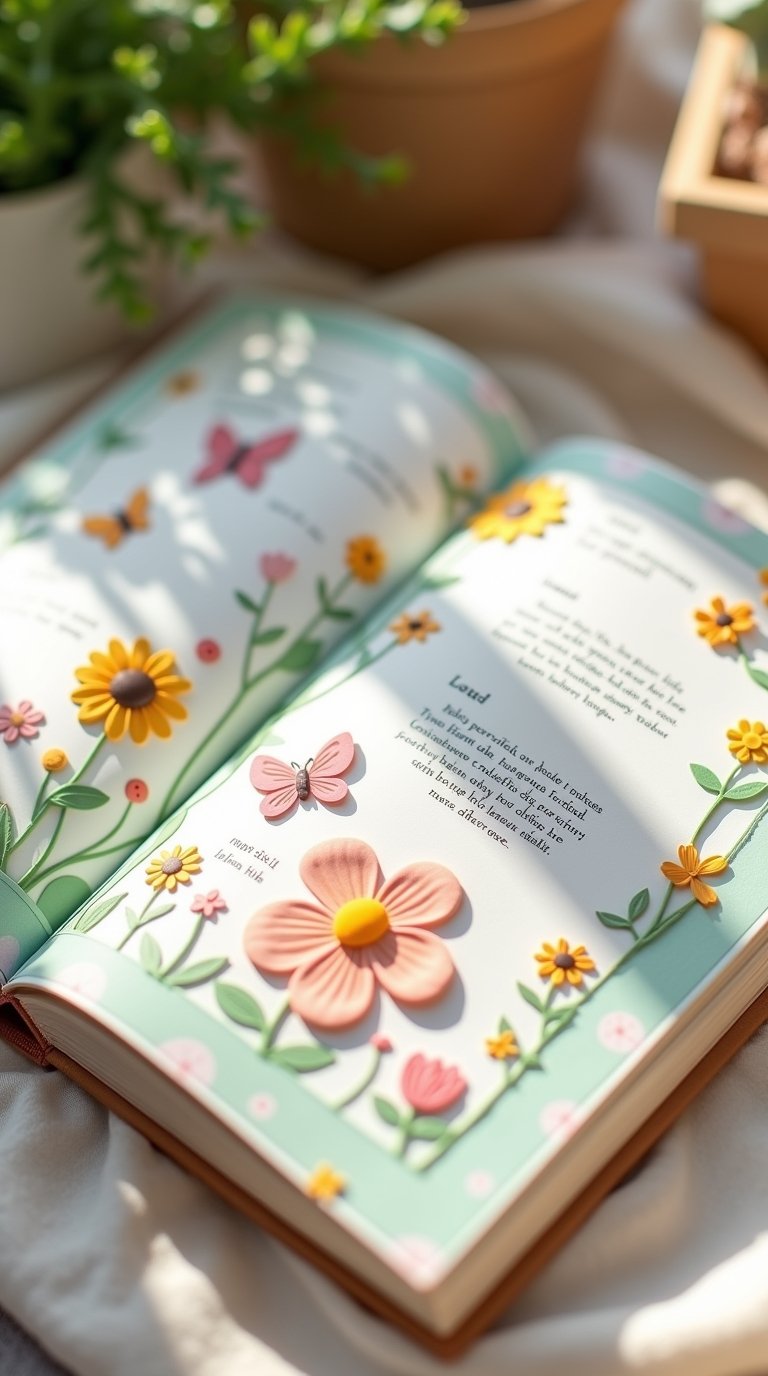
Weather journal pages might sound random, but spring weather is unpredictable. I started documenting what the weather was like and how baby reacted. Rainy days meant more cuddles and books, sunny days meant walks and outdoor tummy time.
Spring outfit collections are practical to document because baby clothes are ridiculously cute and they outgrow them so quickly. When clothes got too small, I'd cut a small square from an outfit that had special meaning and glue it into the memory book.
Plant a seed when baby is born and track growth together. I planted sunflower seeds the week we brought our baby home, and every week I'd photograph baby next to the plant. By the end of spring, we had comparison photos showing both growing bigger and stronger.
Spring color palette pages work well if you're even slightly artistic. Take photos of baby with different colored toys, clothes, and items, and arrange them by color.
Rainy day vs. sunny day activity pages compare what you do on different types of days. This showed patterns I didn't realize existed—rainy days were apparently our reading days, sunny days were walk days.
Milestone Moments to Capture During Baby's First Spring
There are countless tiny milestones happening constantly, and if you try to document everything, you'll overwhelm yourself. So here are the spring-specific moments I think are actually worth capturing.
First time outside in spring weather is a significant moment. I took my son outside when he was about a week old, and the look on his face when the breeze hit him was priceless. I wrote down the temperature (68 degrees), what he was wearing, and how long we stayed out.
Easter or spring holiday celebrations give you natural memory book material. Even if baby's too young to understand what's happening, these first holidays are meaningful. If you're planning ahead, check out ideas for a spring bunny baby shower or spring picnic baby shower. I also saved a tiny piece of the Easter grass from baby's basket.
The holidays that might fall during baby's first spring:
Easter
Mother's Day
Memorial Day
Passover
Spring equinox
First encounter with flowers, grass, or other nature elements is interesting to document. I put my daughter on a blanket in the grass for the first time in May, and she was NOT a fan. The next week she tolerated it better. By June she was trying to eat grass like every other baby.
I made a checklist page of "Spring Firsts":
✓ First time feeling grass
✓ First time seeing flowers up close
✓ First picnic
✓ First visit to a garden or park
✓ First time in a swing
✓ First encounter with a butterfly
Mother's Day deserves its own page or spread. Your first Mother's Day as a mom is emotionally charged. I asked my partner to write a little note about that day from his perspective, and it's one of my favorite pages.
Weekly or monthly growth photos with spring backdrops became my routine. I started taking photos every Monday under the same blooming tree in our yard. The tree goes from bare branches to full bloom to green leaves, and baby goes from tiny newborn to actual person with personality.
Developmental milestones that happen during spring months are worth noting with specific dates:
First intentional smile: April 2
First laugh: April 28
First rolled from tummy to back: May 15
First grabbed a toy: May 22
First slept 5 hours straight: June 1
One thing I regret is not documenting the harder milestones. First major blowout, first time I cried from exhaustion. These are real moments too, and I wish I'd been brave enough to include them alongside the picture-perfect stuff.
Incorporating Nature Elements Into Your Memory Book
Something about preserving actual pieces of spring felt really meaningful to me—like I was bottling up those days somehow.
Pressed flower techniques are easier than you think, but they do require patience. I'd collect small flowers during walks—dandelions, violets, whatever was growing. When I got home, I'd place them between two pieces of parchment paper, then stick them inside a heavy book. You need to leave flowers there for at least 2-3 weeks to dry completely.
Flowers that press well:
Pansies (they keep their color really nicely)
Violets
Daisies (though the centers can be thick)
Small roses
Forget-me-nots
Individual petals from bigger flowers
Flowers that don't work as well:
Tulips (too thick and fleshy)
Anything super chunky
Flowers with too much moisture
Leaf printing and nature stamping is a practical activity that also creates memory book content. I'd coat a leaf in washable paint and press it onto the page to create prints. Oak leaves worked best because they're flat with good detail.

Creating texture pages with bark rubbings adds a sensory element that's different from regular photos. I'd take a piece of paper outside, hold it against tree bark, and rub a crayon over it to get the texture pattern.
Photography tips for nature backgrounds:
Morning light is optimal - That soft light between 8-10am is beautiful and not too harsh on baby's eyes
Avoid direct overhead sun - It creates unflattering shadows and makes baby squint
Use nature as natural frames - Position baby near flowering bushes or under trees
Get down on baby's level - Don't just stand over them, crouch or lie down
Keep baby comfortable - A fussy baby won't give you good photos
Safety considerations are important when using natural elements:
Only use completely dry natural items
Seal everything between plastic or laminate
Check items for bugs before bringing them inside
Avoid anything with moisture that could create mold
Keep pages with natural elements away from baby's reach
Digital alternatives exist if you want the nature theme without actual plant material. I took close-up photos of flowers, leaves, and nature textures, then used them as backgrounds or borders. Sometimes a beautiful photo of baby with flowers is more practical than trying to preserve the actual flowers.
Journaling Prompts for New Moms to Include
Journaling felt nearly impossible during those early weeks. I could barely form complete thoughts, let alone write meaningful entries about motherhood. But looking back, I'm so glad I pushed through and wrote even short, messy notes.
"Dear Baby" letters are something I tried to write monthly. These are letters addressed directly to your baby, telling them about the season, what's happening in the world, and what you hope for them. Sometimes these letters were just three sentences because that's all I had energy for. Short and authentic is better than nothing.
Daily or weekly gratitude entries helped my mental health considerably. Every Sunday I'd write 3-5 things I was grateful for that week. If you're navigating the emotional ups and downs of early motherhood, you might find helpful strategies in our guide on spring postpartum mental wellness.
Gratitude prompts that worked for me:
What made you smile this week?
Which moment do you want to remember forever?
What surprised you about motherhood this week?
What's one thing your baby did that amazed you?
What support did you receive that meant a lot?
Funny anecdotes and challenges are important to document because you forget them faster than you'd think. These little stories capture the chaos and humor of early motherhood in a way that posed photos just can't.
Emotional reflections on postpartum experiences are harder to write but quite valuable. I struggled with postpartum anxiety and I wrote about it sometimes. Not in detail that would worry my kid someday, but enough to be honest about my experience.
Descriptions of baby's personality started to appear around 2-3 months when I could actually see who this little person was becoming. These details are so specific to those early months.
Family reactions and spring visitors gave me easy journaling content. I'd document who came to visit, what they said about baby, and memorable moments from the visit.
Favorite memories from each week - I'd ask myself: If I could only remember one moment from this week, what would it be? Then I'd write that down.
Dreams and wishes for your child's future springs is forward-looking journaling that I found really emotional to write. I'd think about what I hoped for my baby as they grew—not pressure or expectations, but wishes and dreams.
One last thing about journaling: don't wait until you feel like you have something profound to say. Most of my entries are just normal, everyday observations. "You wore the bunny outfit today. It's already getting tight." That's enough because it captures the reality of that day.
Photo Ideas That Capture Spring with Your Baby
I have approximately 6,000 photos from my baby's first spring. Most of them are blurry or basically identical to each other, but buried in there are some gems that I'm so glad I took.
Monthly milestone photos with seasonal props became my regular practice. Every month I'd set up a little scene with spring items. I used the same white blanket each month so you could really see baby growing.
Props I used throughout spring:
Wooden letter blocks spelling their month age
A small chalkboard where I'd write stats
Seasonal flowers in a vase
Stuffed animals that stayed the same size
Baby's favorite toy from that month
Holiday-specific items when relevant
Outdoor natural light portraits work beautifully when you nail the timing. Early morning (before 10am) and late afternoon (after 4pm) give you that soft, golden light.
Best outdoor spots I found:
Under a big tree (shade but still bright)
In a field of flowers (even weeds work)
On our front porch with morning sun
In the backyard against flowering vines
At a local park with lots of trees
Candid moments are often better than posed photos:
Baby is doing tummy time on a blanket in the grass
Looking at flowers or trees together
Reading board books outside
Baby sleeping in the stroller during walks
Those in-between moments where nothing special is happening, but everything feels special
Baby with spring animals was harder to capture than I expected. Keep expectations reasonable and be pleasantly surprised when something works out.
Matching spring outfits or mommy-and-me photos are enjoyable if you're into that aesthetic. If you're still pregnant and planning for spring, you might enjoy our spring maternity style trends. You don't need to spend a fortune—just pull similar colors from what you already own.
Before-and-after spring season comparison shots are remarkable when you look back at them. I took a photo of my baby in our backyard in late March when everything was still brown and bare, then the exact same photo in late May when everything was green and blooming.
Golden hour photography during spring evenings became our ritual. We'd take baby outside around 6pm when the light was perfect. The photos from these times have this warm, glowy quality that's impossible to recreate with editing.
For more ideas on capturing beautiful moments outdoors, check out these spring newborn photo ideas.
Rainy day window photos and indoor spring-themed setups saved me when weather didn't cooperate. I'd position baby by a window where they could look out at the rain.
If you need inspiration for rainy day celebrations, explore these spring rain baby shower ideas.

My biggest photo advice is to just take lots of them. Take photos of ordinary moments, not just the special occasions. Some of my favorite spring photos are the imperfect, real-life ones that show what our days actually looked like.
Time-Saving Memory Book Hacks for Busy New Moms
Finding time to work on a memory book when you have a newborn is genuinely challenging. I'm going to share what actually worked for me.
Using smartphone apps for organization was helpful. I downloaded Tinybeans and just uploaded photos there throughout the day. You can add captions right away before you forget the context.
Apps that helped me:
Tinybeans - upload photos with captions, can share with family
Google Photos - automatic backup and organization by date
1 Second Everyday - creates a video diary
Chatbooks - auto-creates photo books from your Instagram
Baby Tracker apps that let you add photos to daily logs
Creating monthly two-page spreads instead of daily entries saved my sanity. Monthly was much more realistic. At the end of each month, I'd sit down with all my photos and notes and create just two pages covering the highlights.
Each monthly spread included:
One good photo from that month
Stats (weight, length, clothing size)
Milestones achieved
A short paragraph about the month
Maybe a pressed flower or small memento
Any holidays or special events
Utilizing pre-designed templates and printables from Etsy takes significant pressure off trying to design layouts from scratch. You can buy digital memory book pages for about $5, print them out, fill in the blanks, and stick them in your book.
Batch-processing saved me from feeling constantly behind. I'd block out one nap time per week, gather everything from that week, and work on several pages in one sitting.
Voice memo journaling was accidentally brilliant for me.I started recording voice memos while walking with the stroller—just talking about my day. If you're looking for tips on making the most of those outdoor moments, read our spring stroller walk tips with baby. Later I'd transcribe bits of these into my memory book.
Involving your partner or family members takes pressure off you being the only memory keeper. I asked my partner to take photos sometimes or write a dad's perspective entry once a month.
Quick photo collage techniques made my pages look more polished. I'd print 4-6 small photos, arrange them in a grid on a page, stick them down, and call it done.
Setting realistic goals was the most important approach. I stopped comparing my memory book to the perfect ones on Instagram. I aimed for "done" instead of "perfect."
My realistic goals:
Document at least one moment per week
Create 2 pages per month minimum
Don't stress about fancy layouts
Include both good and hard days
Remember that something is better than nothing
Digital vs. Physical Spring Memory Books: Choosing Your Format
I ended up doing both digital and physical memory books, and I don't regret the extra effort. Let me break down why you might choose one over the other—or both.
Benefits of traditional physical scrapbooks:
It exists independently of technology
I can include actual objects like fabric and pressed flowers
My handwriting adds a personal touch
It's satisfying to physically work on it
No screen time required to look at it later
It feels more like an heirloom I can pass down
Advantages of digital memory books:
You can work on it from anywhere using just your phone
Easy to share with grandparents and family via email or app
Automatic backup to the cloud
Faster to create than physical scrapbooks
Can edit or fix mistakes easily
Usually cheaper overall
Can create multiple copies easily
Hybrid approaches are where I landed. I keep a physical scrapbook for special pages with pressed flowers and handwritten letters. But I also maintain a digital photo book through Chatbooks that captures way more day-to-day moments.
Popular digital platforms and apps:
Chatbooks - Auto-makes books from Instagram or photos ($10-15 per book)
Tinybeans - Photo journal app that's free
Shutterfly - Create custom photo books online
Mixbook - Similar to Shutterfly
Artifact Uprising - More expensive but beautiful minimalist books
Cost comparison:
Physical memory book costs:
Album: $15-40
Photos: $10-20/month
Supplies: $20-50 initial investment
Total spring estimate: $100-150
Digital memory book costs:
App subscriptions: $0-5/month
Printed books if ordered: $10-30 per book
Total spring estimate: $30-90
My recommendation is to start with whatever feels easiest and most sustainable for you right now. The important thing is capturing the moments somehow, in whatever format you'll actually use.
Including Family and Friends in Your Spring Memory Book
Everyone in your baby's life wants to be part of this documentation, and their contributions made my memory book much richer.
Guest book pages for spring visitors became one of my favorite sections. I created a simple page with "Visitors This Spring" as the header. When people came to meet the baby, I'd hand them a pen and ask them to sign their name, the date, and add a short message.
Grandparent interview pages added perspective I couldn't provide myself. I created a questionnaire and asked both sets of grandparents to fill it out.
Questions I asked:
What's your favorite memory of spring from when you were a child?
What do you hope to do with your grandchild during spring as they grow up?
What was spring like the year you became a parent?
Any family spring traditions you want to pass down?
What does spring mean to you?

Sibling pages are important if you have older kids. My friend interviewed her 4-year-old about being a big brother and the answers were hilarious and sweet.
Family tradition pages specific to spring document what you do year after year:
Our new spring traditions:
Visiting the botanical garden when tulips bloom
Taking photos under the same flowering tree every year
Planting something new in the garden
Easter egg hunt
Making homemade strawberry jam when berries are in season
"Advice from loved ones" sections gave people a chance to share wisdom for baby's future. At baby's spring baptism, I set out cards asking people to write advice or wishes.
Photo pages featuring extended family capture those spring gatherings that might not happen often. I dedicated two pages to when family came from out of state—photos of baby with cousins, grandparents, aunts and uncles.
Virtual visitor pages for long-distance relatives was something I added. My brother lives overseas and couldn't meet the baby during spring, but we FaceTimed regularly. I took screenshots of those video calls and created a page about our virtual visits.
Creating duplicate pages or photo gifts for family members is something I started doing, and they appreciated it. When I create a particularly nice page, I'll make a copy to give as a gift.
One unexpected benefit of involving others is it took pressure off me to document everything myself. Sharing the memory-making responsibility made it feel less overwhelming.
Budget-Friendly Spring Memory Book Ideas
Creating a memory book can get expensive quickly if you're not careful. I definitely spent more than I needed to at first before I figured out what actually mattered.
Free printable templates and resources saved me probably $50-100 in supplies. Sites like Pinterest have free downloadable memory book templates, journaling cards, and decorative elements.
Where to find free printables:
Pinterest
Mom blogs
Etsy (some free options)
Canva templates
Baby tracker apps
DIY embellishments using household items became quite useful:
Wrapping paper scraps for backgrounds and borders
Old magazines for cut-out letters and images
Fabric scraps from outgrown baby clothes
Ribbons from gifts and packages
Paint samples from hardware stores as color blocks
Greeting cards cut up for decorative elements
Dollar store supplies that work perfectly well are everywhere. I buy lots of scrapbook materials from Dollar Tree.
My Dollar Tree favorites:
Sticker sheets
Foam board for photo backings
Glue sticks and tape runners
Construction paper and cardstock
Markers and pens
Seasonal decorations to use as props
Repurposing greeting cards, wrapping paper, and magazines means nothing goes to waste. Baby shower cards, congratulations cards—I cut out pretty parts and use them in the memory book.
If you're looking for sustainable celebration ideas, check out these eco-friendly spring baby shower favors.
Using smartphone photos instead of professional photography saved me hundreds of dollars. I got photos printed for 9 cents each at CVS during a sale. Even printing 50 photos only cost $4.50.
Simple composition notebooks transformed into memory books is something I did for one of my projects. I bought a $1.50 composition notebook and covered it with pretty wrapping paper.
Trading crafting supplies with other new moms is smart. If you're in a mom group or have friends with babies, swap supplies you're not using.
Prioritizing meaningful content over expensive materials is the most important budget principle. A memory book with expensive supplies but no actual memories written down is less valuable than a simple notebook full of stories.
What actually matters:
Your words and observations about baby
Photos of ordinary moments
Pressed flowers you found on walks (free)
Dates and details of milestones
Your authentic voice and experience
I spent maybe $30 total on my spring memory book. The album was $15, photos were $10, and supplies were $5 from Dollar Tree. Everything else was free or repurposed.
Frequently Asked Questions
When should I start my baby's spring memory book?
Start whenever feels right. Many moms begin when baby is born, but there's no wrong time. Even if spring is halfway over, you can backtrack with photos and memories. The best time to start is now.
How much time does maintaining a memory book require each week?
As little as 15-30 minutes weekly. Capture moments with your phone throughout the week, then dedicate one nap time to add entries. Even one page per month creates a meaningful keepsake.
What if I'm not crafty or creative—can I still make a beautiful memory book?
Absolutely. Use pre-made books with prompts, simple photo albums with captions, digital apps, or print services. Your authentic words and photos matter more than perfect designs.
Should I include difficult postpartum moments in my memory book?
This is entirely personal. Many moms find therapeutic value in documenting challenging aspects alongside joyful moments. You can create separate pages to decide later whether to share.
How do I safely preserve fresh flowers or natural elements in my memory book?
Press flowers between heavy books with parchment paper for 2-3 weeks. Attach with acid-free adhesive and seal with contact paper. Alternatively, photograph fresh flowers instead—simpler with no degradation risk.
What's the difference between a baby book and a memory book?
Baby books follow structured formats with pre-printed milestone prompts. Memory books are freeform, letting you document whatever feels meaningful without specific structure. Many moms use both approaches.
How can I involve my partner in creating the memory book?
Ask them to contribute journal entries, take photos, collect mementos, or choose favorite moments weekly. Alternating weeks or adding "Dad's perspective" pages reduces your workload and adds diverse viewpoints.
Wrapping It Up
Your baby's first spring is fleeting—those tiny toes and newborn snuggles won't last forever. But the memories you're creating can last a lifetime when you preserve them thoughtfully. Whether you're pressing flowers, snapping photos during golden hour walks, or jotting down reflections, you're giving your child an invaluable gift.
If you're still preparing for baby's arrival, explore our spring garden baby shower ideas, springtime sunshine baby shower ideas, or get inspired by beautiful spring table centerpiece ideas for your celebration. For expectant moms, don't miss our guides on spring prenatal fitness routine, pregnancy nesting tips for spring cleaning, and spring breastfeeding essentials to help you prepare.
Remember, there's no perfect way to create a spring memory book. Don't wait for the "right time" or "perfect supplies." Start today with what you have. If you're navigating sleep challenges as the seasons change, our guide on spring baby sleep schedule changes might help. Spring reminds us that growth happens in seasons, and so does motherhood. So grab that camera, press those flowers, and start capturing the magic—because these days are precious.
