25 Summer Postpartum Self Care Ideas
NeaUp to 80% of new mothers experience the “baby blues,” and about 1 in 7 develop postpartum depression—making postpartum mental health support more important than ever. As a mom of 5, I've lived that statistic more times than I'd like to admit.
Here's the truth: postpartum self-care isn't selfish — it's survival. I know this from recovering postpartum through five different summers, each one teaching me what my body and mind actually needed to heal. This guide walks you through 25 practical summer postpartum self-care ideas that work for real moms with real babies — because I've been there, multiple times over.
Whether you're still in the thick of those early weeks figuring out newborn sleep tips and survival mode, or you started preparing long before baby arrived with a solid baby registry checklist, planned your baby shower, or even found simple ways to bond through crafts for kids — this summer, I want to help you add one more thing to the list: taking care of you. Let's dive into how you can make this summer a season of healing, not just surviving
This post may have affiliate links, which means I may receive commissions if you choose to purchase through links I provide (at no extra cost to you). As an Amazon Associate, I earn from qualifying purchases. Read more about these links in my disclaimer policy.
Summer Postpartum Self Care Ideas
Hydration & Nutrition
Staying hydrated postpartum is harder than most people expect — add summer heat and breastfeeding, and your fluid needs increase significantly. With a little planning, you can stay on top of it without much effort.
Create infused water stations throughout your home
Place pitchers in different rooms — by your nursing chair, in the kitchen, beside your bed — so drinking throughout the day requires no effort at all. Good flavor combinations to keep it interesting:
Cucumber and mint (refreshing, helps with bloating)
Lemon and strawberry (bright and summery)
Watermelon and basil (surprisingly good)
Orange and blueberry (antioxidant-rich)
Most breastfeeding mothers need around 100 ounces of fluid per day. Adding a splash of coconut water gives you extra electrolytes on especially hot or draining days. For more tips on managing the heat while nursing, check out this guide on summer breastfeeding tips.
Prep freezer smoothie packs
On days when real meals feel impossible, a freezer smoothie pack means the difference between eating something nourishing and skipping a meal entirely. Set aside 20 minutes on the weekend to portion out ingredients and you'll thank yourself all week.
A reliable combination:
1 cup frozen berries
1 banana (peeled before freezing)
Handful of spinach (the flavor disappears, truly)
Scoop of protein powder
Chia seeds or flaxseed
One bag plus milk in a blender equals a real meal in two minutes. The protein supports milk supply and keeps your energy more stable through the day.
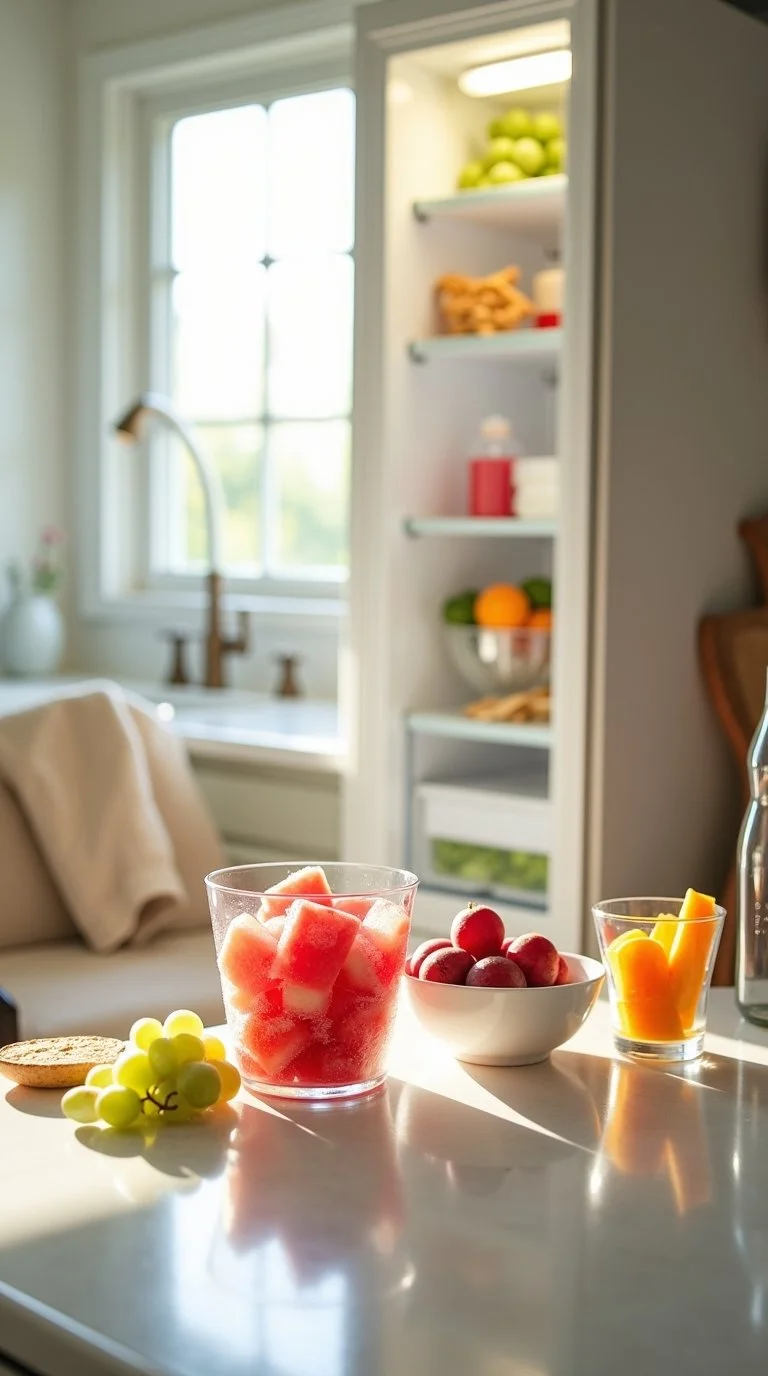
Stock cooling postpartum snacks
Keep easy, one-handed options in the fridge at all times: pre-cut watermelon, frozen grapes, Greek yogurt cups, string cheese, and fruit popsicles. Frozen grapes are especially worth keeping around — cold, hydrating, and satisfying with zero prep required.
Set hydration reminders
Sleep deprivation makes it easy to forget basic things, including drinking water. A free app like WaterMinder with hourly reminders is a simple fix. Dehydration can cause headaches, dizziness, and a drop in milk supply — none of which you need more of right now.
Try electrolyte-enhanced drinks
When regular water isn't enough to offset fluid losses from night sweats, heat, and nursing, electrolytes can make a meaningful difference. Many providers recommend them if you're experiencing fatigue or dizziness beyond what sleep deprivation alone explains.
Options worth trying:
Coconut water (natural electrolytes, no additives)
Liquid IV packets (effective, though pricier)
Nuun tablets (dissolve in water, lightly flavored)
Pedialyte (the popsicle version works well too)
LMNT (zero sugar option)
Gentle Physical Care
Moving your body postpartum isn't about bouncing back — it's about supporting recovery in a way that's safe and sustainable. The goal is to feel more human without pushing your healing body past what it's ready for.
Take early morning walks
Early morning is the most forgiving time to be outside in summer — cooler temperatures, less noise, and light that genuinely tends to lift mood. Even 15 to 20 minutes around the block provides real benefits: vitamin D, a mental reset, and gentle movement that supports circulation and recovery.
Start very small. Your pelvic floor is still healing, and overdoing it can set you back. A reasonable progression: around the block to start, roughly a mile by week 8, two miles by week 12. Increased bleeding or pressure are signals to scale back. Supportive footwear and a postpartum belly wrap (if your provider recommends one) can make a real difference in comfort.
Once you're ready to venture further, these summer stroller walk tips can help you plan comfortable outings with your baby.
Try postpartum-safe water activities
Once your provider clears you — typically 6 weeks for vaginal births, 8 to 10 weeks for cesarean deliveries — water activities are among the most restorative options available. Buoyancy reduces joint stress while providing cooling relief that's hard to replicate any other way.
Starting simple is perfectly fine: floating or water walking in the shallow end gives real benefit without pelvic floor impact. Some community centers offer postpartum water aerobics classes, which carry the added benefit of being with others going through the same thing.
Important: Do not enter pools or open water while still bleeding. Infection risk is real. A supportive swimsuit that accommodates breast changes makes the experience more comfortable.
Practice pelvic floor exercises in a cool room
Pelvic floor recovery is one of the most important — and most overlooked — parts of postpartum healing. A few minutes daily in a comfortable, cool space is all it takes.
A few things worth knowing:
Kegels involve both contracting and releasing; the release matters as much as the squeeze
Quality matters more than quantity
Coordinate with your breath — exhale on the contraction
Avoid doing Kegels while urinating, as it can interfere with normal bladder signals
A basic daily routine:
10 quick pulses (2 seconds on, 2 seconds off)
10 long holds (10 seconds on, 10 seconds off)
10 gradual contractions (squeeze incrementally, then release fully)
If you're experiencing significant leaking, prolapse symptoms, or pain, ask your doctor about pelvic floor physical therapy. It's covered by most insurance plans and addresses issues that exercises alone often can't resolve.
Stretch during tummy time
Tummy time requires your presence but not constant active engagement — a natural window for your own movement. Set a yoga mat beside the play area and do gentle stretches while staying attentive to your baby. Cat-cow for the back, child's pose for the hips, gentle twists for digestion. Some sessions will last three minutes. Others, ten. Meet yourself where you are that day.
When your baby is ready for more stimulation, explore these summer sensory play ideas for babies to make tummy time even more engaging.
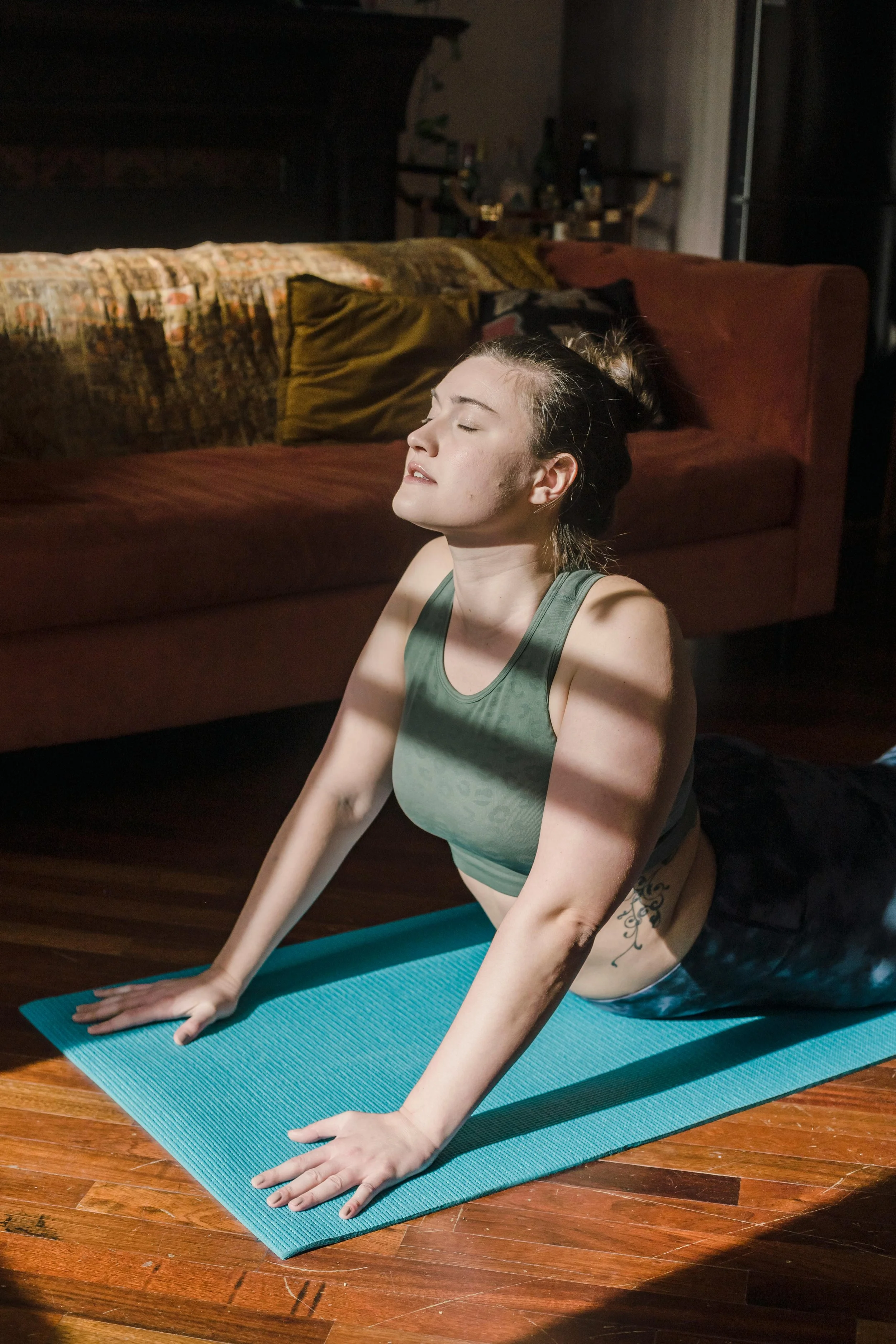
Create a shaded outdoor yoga space
A shaded spot outside — under a tree, on a covered porch — with a yoga mat and 10 minutes of simple poses in the early morning or evening can be genuinely restorative. Postpartum-specific YouTube series (Yoga with Adriene is a good starting point) keep things appropriately gentle. The baby will sometimes interrupt — that's part of it. The sessions that do come together are worth the effort.
Heat Management & Comfort
Postpartum temperature regulation is its own challenge — hormonal fluctuations, night sweats, and the body heat from nursing sessions can make summer feel particularly intense. A few adjustments make a meaningful difference.
If you're still pregnant and struggling with the heat, you might also find this guide on staying cool during pregnancy in summer helpful to bookmark for a friend
Invest in cooling nursing pads
Bamboo pads with a cooling gel layer outperform standard pads significantly in summer heat. Keep a few in the refrigerator and rotate them before sessions. They're also more absorbent and reusable, which makes them more economical over time.
Take refreshing face mist breaks
A small spray bottle of chilled water or rosewater kept in the fridge provides immediate, accessible relief. Spraying the back of your neck and wrists — where pulse points are close to the surface — cools the whole body more efficiently than the face alone.
Use cooling towels strategically
Wet athletic cooling towels draped over your neck during long nursing sessions or before babywearing help manage the heat both of you generate. Keep three or four in rotation. Avoid placing them directly on a newborn's skin, as infants regulate temperature differently.
Wear breathable, loose clothing
Prioritize cotton nursing nightgowns, linen dresses, oversized tees, and moisture-wicking nursing tanks. Skip underwire bras for now — your breast size may be changing quickly, and comfort is the practical priority. Being comfortable in your clothing removes one unnecessary source of physical tension from your day.
Create a cool nursing station
Your primary nursing spot should work for you. A small fan directed at your upper body (not at baby), cold water within reach, snacks, your phone charger, and diapers nearby — all of it reduces friction during the hours you'll spend there. A slightly cooler room temperature, with baby dressed appropriately, supports your comfort and therefore your capacity to show up well.
Mental & Emotional Wellness
Physical recovery is visible. Mental and emotional recovery is less so, but equally real. Postpartum can feel isolating, particularly in summer when the rest of the world seems to be thriving. Small, consistent practices provide real grounding during a disorienting time.
Practice sunrise or sunset mindfulness
Five minutes outside watching the sky — no phone — is a meaningful reset for an overtaxed nervous system. A simple breathing pattern helps: inhale for four counts, hold for four, exhale for six. Repeat until you feel something shift. The baby will sometimes interrupt. Try again tomorrow. Even two intentional minutes of breathing is better than none.
Join a virtual postpartum support group
Many hospitals offer these, and virtual access removes most of the barriers — no commute, no need to get yourself and a baby out of the house in summer heat, no pressure to look put-together. You can nurse during the session and turn your camera off on hard days.
Hearing other mothers articulate what you've been struggling to name often prompts someone to seek the help they need. A group facilitated by a mental health professional is particularly valuable. Apps like Peanut and moderated Reddit forums can also supplement connection, though it's worth being selective about where you spend that energy.
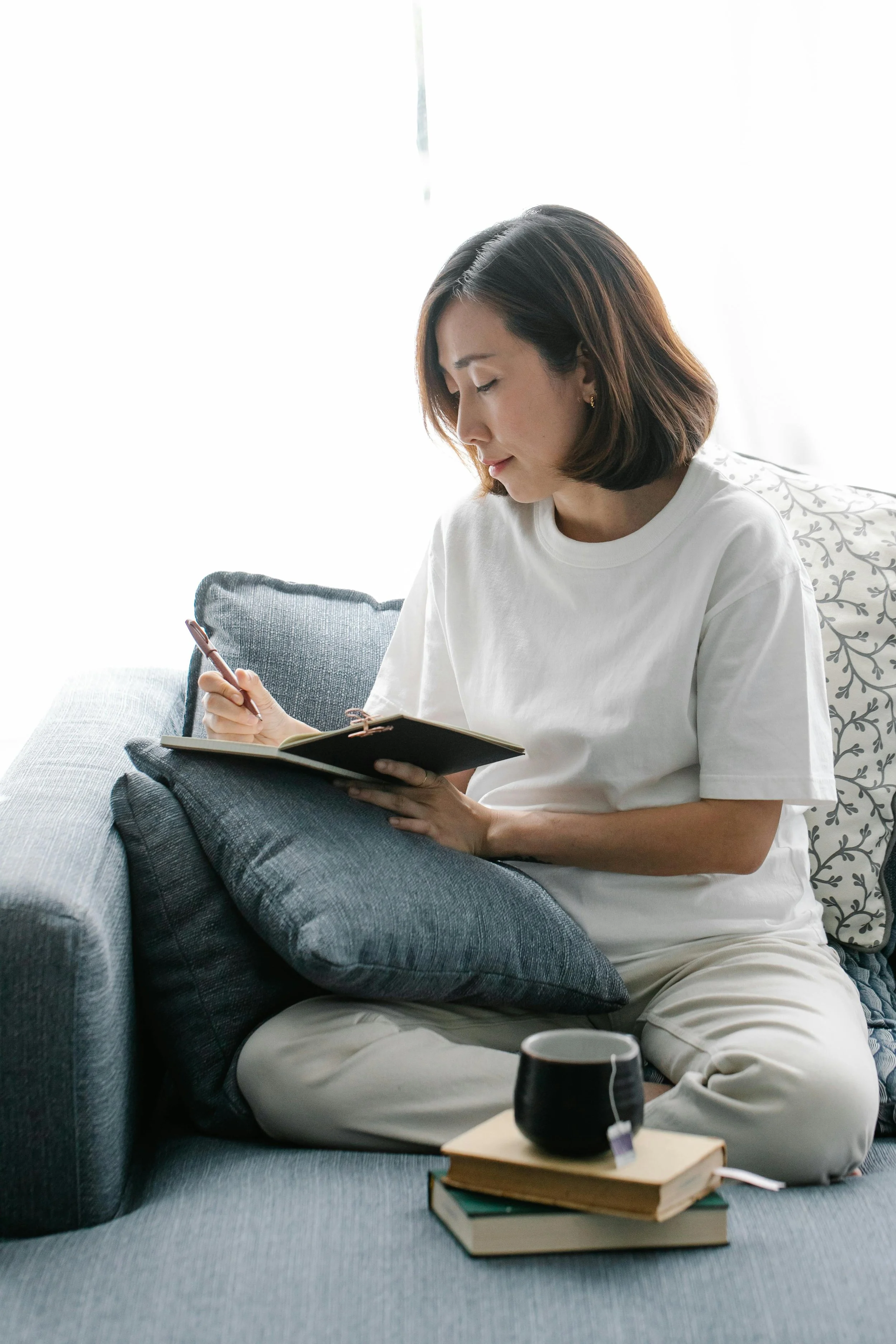
Start a gratitude journal
Keep it simple: three items before sleep — one thing you did well, one thing you're grateful for, one small moment of goodness. On the hardest days, all three can be "we got through it." That counts. Looking back over a few weeks of entries tends to reveal progress that's impossible to see from inside a single difficult day.
Set one boundary per week
Postpartum is a reasonable time to be clear about what works for your family right now. Visiting hours, advance notice before drop-bys, visit length limits, not passing baby around — these are all legitimate needs. A simple "that doesn't work for us right now" requires no further explanation. Start with the boundary that's costing you the most energy and practice holding it. Your mental health is a real consideration, not an excuse.
Schedule "mental health walks"
These are distinct from exercise walks. Ten minutes outside alone — without music, podcasts, or phone calls — when a support person is available gives your nervous system room to decompress. If regular solo time isn't possible, ask for it directly. Trading off with a friend, timing it with a nap and a monitor, or walking laps in the yard all count. Brief solitude helps restore the capacity to keep showing up.
Quick Self-Care Rituals
These are the small, accessible things that take five minutes or less but register as meaningful when you're in survival mode. Don't underestimate them.
Create a 3-minute shower sanctuary
For many postpartum mothers, a shower is the closest thing to genuine solitude available. Making it slightly more intentional — peppermint body wash for a cooling, energizing effect, eucalyptus shower steamers, a cool rinse at the end — turns a functional task into something briefly restorative. On especially hot days or after heavy night sweats, a second quick rinse in the morning is a reasonable and worthwhile choice.
Try one-handed self-massage
Nursing creates sustained tension in the shoulders, neck, and upper back. Using your free hand during feeding sessions to knead that tension is practical relief with no additional time required. Shoulder kneading, gentle scalp massage, and basic pressure point techniques are all manageable one-handed. YouTube has good instructional videos worth bookmarking.
Use aromatherapy safely
A few drops of lavender, sweet orange, bergamot, or frankincense in a diffuser can support mood and sleep. Keep diffuser use gentle in rooms where baby sleeps, as infant airways are sensitive.
One important note for breastfeeding mothers: peppermint and sage can decrease milk supply when used consistently. This applies to aromatic, topical, and dietary use. If you notice a supply drop, review any new herbal or aromatic products you've introduced.
Establish a nighttime skincare ritual
Two minutes — cool water, a gentle cleanser, moisturizer, eye cream — creates a small but real transition between caregiving and rest. It's also a quiet act of care toward yourself that matters more than it might seem. Some nights it won't happen. That's fine. The goal isn't a perfect routine; it's having one to return to.
Schedule one "you" activity weekly
Once a week, something that's entirely for you — a solo coffee shop visit, a pedicure, a drive with music, a call with a friend, a real nap. Put it on the calendar and treat it like any other appointment you wouldn't cancel. The guilt is common and worth resisting. Taking care of yourself makes sustained caregiving possible. Start with 20 minutes if that's what's available right now, and build from there.
When you're feeling up to it, exploring baby's first summer activities together can be a joyful way to bond while getting outside.
Conclusion
Postpartum recovery in summer doesn't mean missing out — it means finding small, manageable ways to care for yourself while caring for your baby. These ideas aren't about doing more; they're about pouring back into yourself.
Some days you'll try five strategies. Other days, keeping everyone alive counts as a win. That's okay. Taking care of yourself isn't optional — it's essential.
There's no timeline for "bouncing back." Give yourself the same grace and patience you're giving your newborn. You're not just surviving the fourth trimester — you're building the foundation for thriving motherhood.
Pick one idea today. Your future self will thank you.
Frequently Asked Questions
How soon after giving birth can I start exercising outdoors in the summer?
Wait 6 weeks after vaginal birth, 8–12 weeks after a c-section. Gentle walking can start sooner. Always get doctor clearance, avoid peak heat hours, stay hydrated, and stop if you experience bleeding, pain, or dizziness.
Is it safe to go swimming postpartum during summer?
Wait until bleeding has stopped and incisions are fully healed — usually 4–6 weeks. Swimming too early increases infection risk. Once cleared, it's great low-impact exercise. Just make sure your swimsuit is supportive.
How can I stay cool while breastfeeding during hot summer days?
Nurse in air-conditioned rooms, wear breathable clothing, keep cold water nearby, and use cooling towels on your neck. Cooling gel nursing pillow inserts are a game-changer, and cool cabbage leaves help with engorgement.
What are signs I'm overdoing it postpartum during summer activities?
Bright red bleeding, dizziness, unusual pain, extreme fatigue, or heat exhaustion symptoms mean it's time to slow down and call your provider. The postpartum period is a full year — be patient with yourself.
How do I deal with the pressure to "get my body back" during swimsuit season?
Your body doesn't need to "get back" anywhere. Give yourself 9–12 months, wear what makes you comfortable, and unfollow anything that makes you feel bad. Bounce-back culture is unrealistic — ignore it.
What self-care activities can I do with my baby during summer?
Stroller walks, shaded outdoor time, baby-and-me yoga, park picnics, and mom groups all work great. Self-care and baby time can overlap — peaceful moments together absolutely count.
How can I get enough sleep during long summer days with a newborn?
Use blackout curtains, keep your room cool, and sleep when baby sleeps. White noise blocks outdoor sounds. Ask your partner to cover some night wakings — asking for help is necessary, not weak.
