Wild Garden Ideas: How to Create a Beautiful, Low-Maintenance Natural Garden
A traditional mown lawn supports almost no wildlife. A wild garden — even a modest one — can host hundreds of species of insects, birds, and small mammals. As a mom of five, I know how much a backyard matters. It's where my kids have grown up — playing, exploring, turning over rocks to find beetles. Wanting to give them a garden that felt genuinely alive was what first pushed me toward a backyard spring refresh, and it completely changed how I think about outdoor spaces.
When I first let parts of my garden grow wild, I worried it would look unkept. Then the bees arrived, then the butterflies, then one evening a hedgehog snuffling around a log pile I'd built from old prunings. That moment changed everything. Whether you have a large backyard or a small urban plot, there are wild garden ideas that can work for you. Let's get started.
This post may have affiliate links, which means I may receive commissions if you choose to purchase through links I provide (at no extra cost to you). As an Amazon Associate, I earn from qualifying purchases. Read more about these links in my disclaimer policy.
Getting Started with Wild Garden Ideas
Wildflower Meadow Ideas for Every Garden Size
A wildflower meadow is perhaps the most recognisable wild garden idea, and for good reason. When it comes into full bloom — red poppies, blue cornflowers, white ox-eye daisies all flowering together — it's a genuinely moving sight. It took me two growing seasons to get it right, but when it finally came together, it was worth every bit of patience.
The good news is that meadow-style planting is achievable regardless of how much space you have. Here's how to approach it depending on your garden size:
For Large Gardens (10m+ of available space)
With more space, you can create a genuine perennial wildflower meadow. This involves reducing soil fertility, sowing a mix of native grasses and wildflowers, and managing it with one or two cuts per year — typically in late summer after plants have seeded, and again in late winter. Yellow rattle (Rhinanthus minor) is particularly valuable here. It's a semi-parasitic plant that weakens dominant grasses and creates space for other wildflowers to establish. It should be sown in autumn for best germination.
For Medium Gardens (3–10m of space)
A mixed annual and perennial wildflower border works well in this range. Annual mixes — containing poppies, cornflowers, marigolds, and phacelia — provide colour in the first year while perennial plants are establishing themselves. Seed mixes from suppliers like Pictorial Meadows or Wildflower Turf in the UK, or American Meadows in the US, are well-formulated and take much of the guesswork out of species selection.
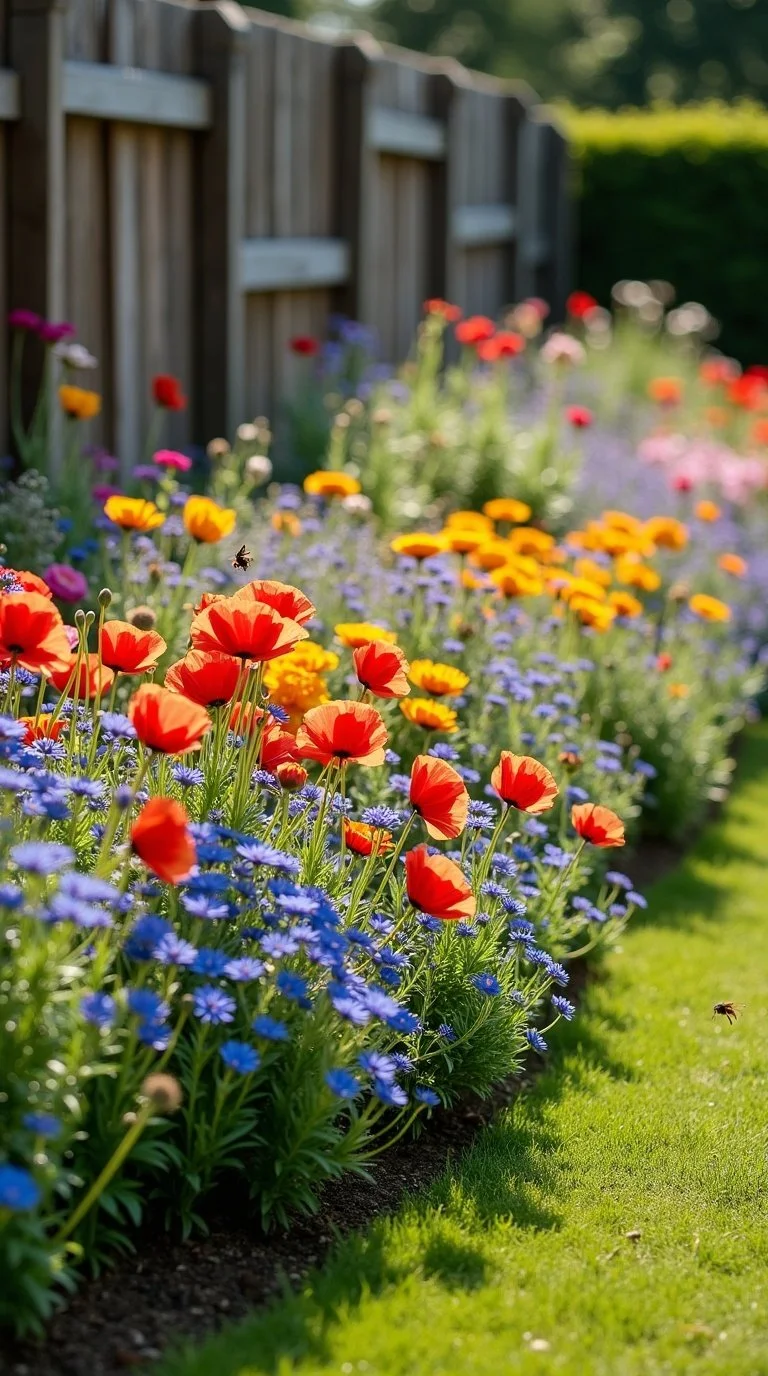
For Small Gardens and Urban Spaces
Wildflower container: A large pot or trough filled with low-nutrient compost mixed with horticultural grit (roughly 50/50) and sown with annual wildflowers like corncockle, cornflower, and field poppy can be surprisingly effective. It works well on patios and balconies where ground space is limited.
Wildflower raised bed: A raised bed framed with reclaimed timber and filled with a poor soil mix can be managed exactly like a larger meadow — just in a much smaller footprint.
Unmown grass strip: Even a 60cm-wide strip of lawn left uncut can become a small wildflower haven over time. Let it grow through the season, see what emerges naturally, and add plug plants of native species to fill the gaps.
A few practical notes on sowing: wildflower seeds are best sown in autumn or early spring, not summer. Many native species require a period of cold — known as vernalisation — before they'll germinate reliably. Always prepare your seedbed thoroughly first. Rake to a fine tilth, firm gently, and then sow thinly. Mixing your seeds with dry silver sand makes it easier to distribute them evenly across the area.
Native Plants to Include in Your Wild Garden
Native plants are the foundation of any ecologically meaningful wild garden. This isn't just a general principle — it has real, practical consequences. Non-native ornamentals can look beautiful, but they often provide far less value to local wildlife than their native counterparts. Native plants have co-evolved with local insects and animals over thousands of years, providing the right nectar, the right foliage, and the right seeds for the creatures that depend on them.
Here are some of the most reliable native plants to consider, organised by their primary benefit:
Best Native Plants for Pollinators
Wild marjoram (Origanum vulgare): One of the most effective plants you can grow for bees and butterflies. It produces masses of small pink flowers from June to September, thrives on dry and chalky soil, and is very forgiving once established.
Field scabious (Knautia arvensis): The lilac pincushion flowers are particularly attractive to long-tongued bumblebees. It grows to around 80cm and flowers from July to October, providing a long season of interest.
Common knapweed (Centaurea nigra): A tough, reliable wildflower that blooms for several months and attracts a remarkable range of pollinators. It's one of those plants that punches well above its weight ecologically.
Foxglove (Digitalis purpurea): A biennial that seeds itself freely once established. Bumblebees are particularly fond of it — they crawl right inside the flowers to reach the nectar. It performs well in dappled shade.
Teasel (Dipsacus fullonum): The dried seed heads are eagerly sought by goldfinches in autumn and winter, and the flowers provide good foraging for bees in summer. It grows to around 2 metres, so it works best as a background plant.
Native Shrubs and Trees for Wildlife
Hawthorn (Crataegus monogyna): One of the most valuable all-round wildlife plants in the British Isles. White blossom supports insects in spring, red berries feed birds in autumn and winter, and the dense thorny growth provides ideal nesting habitat.
Blackthorn (Prunus spinosa): Early white flowers appear in February and March, providing a crucial nectar source for queen bumblebees emerging from hibernation. The sloe berries in autumn also support birds and other wildlife.
Guelder rose (Viburnum opulus): A native shrub with white lacecap flowers in late spring and vivid red berries in autumn. It grows well in damper conditions where other shrubs struggle.
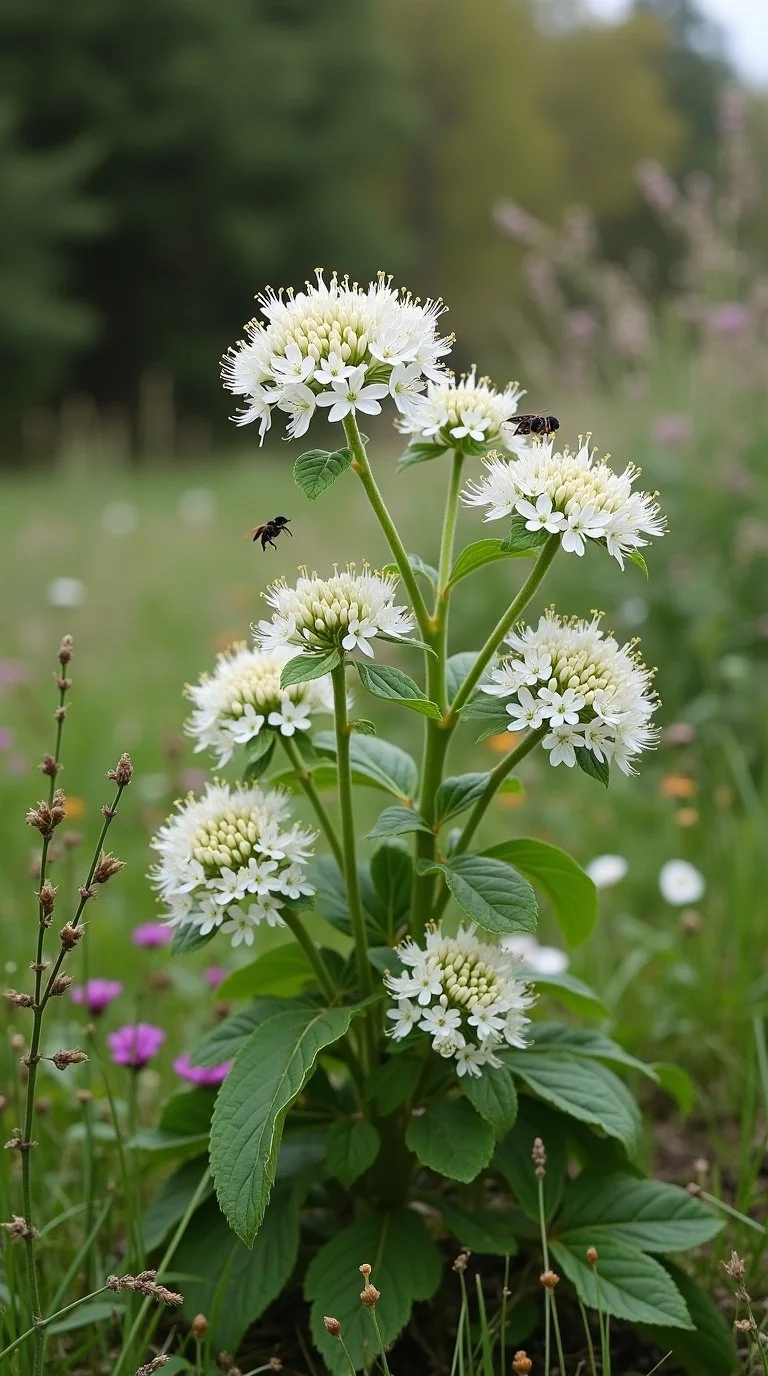
When buying native plants, it's worth seeking out specialist native plant nurseries rather than general garden centres. Look for plants labelled 'of British origin' or 'provenance certified' — these are genuinely native, meaning they're genetically matched to local populations, which matters for local wildlife. The Wildlife Trusts and Plantlife both maintain lists of reputable suppliers.
Wildlife-Friendly Wild Garden Ideas
Creating habitats for wildlife is, in many ways, the heart of wild garden design. And some of the most effective things you can do cost very little. It's one of the more gratifying aspects of this style of gardening — the return on investment, in terms of wildlife, is often far greater than you'd expect.
Wildlife Pond
A pond is probably the single most impactful addition you can make to a garden for biodiversity. Research from the RHS consistently shows that gardens with ponds support significantly more species than those without. The pond doesn't need to be large — a half-barrel pond or even a washing-up bowl sunk into the ground can attract frogs, newts, diving beetles, and dragonflies within a single season.
The key things to get right with a wildlife pond:
Gently sloping sides or a simple ramp so that creatures can enter and exit safely
No fish — they consume frog spawn and aquatic invertebrates that would otherwise thrive
Native aquatic plants: water mint, yellow flag iris, bogbean, and water forget-me-not are all excellent choices
Use rainwater where possible — tap water contains chemicals that can affect aquatic life
Leave fallen leaves at the bottom in autumn — they provide winter shelter for invertebrates
Log Piles and Dead Wood
A log pile built from old apple tree branches and left in a quiet corner can become one of the most biodiverse spots in your entire garden within a year or two. Stag beetle larvae, centipedes, woodlice, and fungi all make use of decaying wood in ways that nothing else in the garden really replicates. Stack logs in a partially shaded spot and leave them completely undisturbed. The more settled and overgrown it becomes, the more valuable it is.
Long Grass and Unmown Areas
Leaving areas of grass uncut is a simple change with a disproportionately large effect. Even a single square metre of long grass provides shelter and food for beetles, spiders, grasshoppers, and small mammals. Slow worms and grass snakes also favour the warm edges of unmown areas. The management is straightforward: cut once in late August or early September after wildflowers have seeded, and remove the clippings so that nutrients don't accumulate in the soil.
Other Habitat Features Worth Adding
Bug hotels: A structure stacked with hollow bamboo canes, pine cones, corrugated cardboard, terracotta pots, and pieces of dead wood attracts a wide range of species — solitary bees, lacewings, and ladybirds among them.
Hedgehog highway: A 13x13cm gap at the base of a fence or wall allows hedgehogs to move freely between gardens. Hedgehogs can roam up to 2 kilometres a night while foraging, so giving them access to multiple gardens makes a genuine difference to local populations.
Bird boxes: Different species have different requirements. Blue tits need a 25mm entry hole; great tits need 28mm; robins prefer an open-fronted box. Position boxes away from direct sun and the prevailing wind for best results.
Wild Garden Design Ideas for Different Spaces
One of the strengths of wild garden design is how well it adapts to different situations. Whether you're working with a large rural plot or a compact urban courtyard, there are approaches that suit your space and your goals.
The Wild Cottage Garden
This is perhaps the most romantic interpretation of wild gardening — tumbling roses, drifts of foxgloves, self-seeded aquilegias, and old stone paths softened by creeping thyme and chamomile. It looks effortlessly beautiful, but there's considered planting underneath all that apparent freedom. The key is mixing cottage garden favourites with genuinely native species, so that aesthetic charm and ecological value go hand in hand. Native ox-eye daisies, field scabious, and wild geranium (Geranium sylvaticum) all fit naturally into a cottage garden setting without looking out of place.

Urban Wild Garden Ideas
Small urban gardens and courtyards can be genuinely transformed by a wild approach. A few ideas that work particularly well in confined city spaces:
Vertical planting: Native climbers like wild clematis (Clematis vitalba), honeysuckle (Lonicera periclymenum), and ivy trained up fences and walls provide nesting habitat, nectar sources, and berries — all without taking up ground space.
Paving gap planting: Removing a few paving slabs and filling the gaps with low-growing wildflowers like self-heal, thyme, and bird's-foot trefoil creates visual interest at ground level and provides foraging opportunities for pollinators.
Container meadows: Large containers filled with low-nutrient compost and sown with annual wildflowers can be very effective on a balcony or patio, and they're easy to manage from one season to the next.
Woodland Wild Garden
If your garden has mature trees or a shaded area, a woodland planting style is well worth considering. Shade-tolerant native plants — wood anemone (Anemone nemorosa), wild garlic (Allium ursinum), native bluebell (Hyacinthoides non-scripta), and dog violet (Viola riviniana) — are genuinely beautiful in spring and thrive under a woodland canopy. A layer of leaf litter mulch and a few moss-covered logs complete the picture. One important note on bluebells: only plant native British bluebells, not Spanish bluebells, which are invasive and hybridise with the native species, weakening local populations over time.
Front Garden Wild Ideas
Front gardens represent a significant missed opportunity in most streets. Replacing even a portion of a paved or gravel front garden with native wildflowers and grasses can have a real visual impact — and with a neat edge or a simple border, it reads clearly as a deliberate design decision rather than neglect. Front wild gardens also have an outward-facing ecological value: they contribute to pollinator corridors along entire streets, which compounds in effect the more gardens participate.
Wild Garden Ideas on a Budget
A wild garden does not require significant expenditure. In fact, some of the most effective elements of naturalistic garden design cost very little or nothing at all. This is one of the most genuinely accessible forms of gardening there is, and it's worth knowing where to focus limited resources for the greatest return.
Free and Low-Cost Plant Sources
Seed swaps: Local horticultural societies, wildlife groups, and online communities regularly organise seed swaps where native wildflower seeds are available for free. The RHS, local Wildlife Trusts, and community groups on social media are good places to start.
Division: Most perennial plants can be divided every few years. Asking neighbours and friends for divisions of established plants — and offering your own in return — is one of the most reliable ways to build a plant collection at no cost.
Self-collection: Once your wild garden is producing seeds, collect them in late summer and store in paper envelopes in a cool, dry place. Sow the following spring or autumn. Over time, this creates a self-sustaining supply of plants perfectly adapted to your garden.
Plug plants vs. large specimens: Buying small plug plants rather than large, established ones saves a considerable amount of money. Native wildflower plugs are widely available for around 50p to £1 each in the UK, and they establish quickly in prepared ground.
DIY Habitat Features
Log pile: Free if you have any prunings available, or if you can source wood chip from a local tree surgeon.
Mini pond: A large plastic container or old Belfast sink, sunk into the ground, costs almost nothing and can attract wildlife surprisingly quickly.
Bug hotel: Constructed from materials you likely already have — old pallets, bamboo canes, terracotta pots, pine cones, and bricks with holes — at minimal or no cost.
Compost bin: Home composting provides free soil conditioner and mulch indefinitely, while also reducing garden and kitchen waste.
Phasing Your Transformation
There's no need to redesign the whole garden at once. Starting with one clearly defined area — perhaps 2 to 4 square metres — allows you to learn what works in your particular conditions before expanding. Each phase can build on the last, and the ecological value compounds over time as plants establish and habitats mature. A measured, phased approach is often both more satisfying and more successful than attempting an immediate whole-garden transformation.
Final Thoughts
Creating a wild garden quietly transforms how you relate to outdoor space — shifting from controlling nature to supporting it. The rewards are real: a bumblebee inside a foxglove, a blackbird singing from a hawthorn you planted, a hedgehog moving through long grass at dusk.
The principles are simple: use native plants, reduce soil fertility, create diverse habitats, and give nature time. You don't need to do everything at once. Start with a wildflower patch, a log pile, or one unmown corner. Nature is resilient — give it the right conditions and it takes care of the rest.
Frequently Asked Questions About Wild Garden Ideas
How do I start a wild garden from scratch?
Stop mowing and using pesticides, test your soil, then introduce native wildflowers suited to your conditions. A small unmown patch can show results within one season.
Are wild gardens hard to maintain?
Not once established. Expect one or two cuts a year, occasional invasive species management, and light tidying. Full establishment takes two to three years.
What's the difference between a wild garden and a neglected garden?
Intention. A wild garden uses native plants and planned care; a neglected one is dominated by invasives with little ecological value. Defined edges and maintained paths signal the difference.
Can I have a wild garden in a small space?
Yes. A window box, small border, or balcony container planted with native wildflowers all make a real contribution to urban biodiversity.
Which wildflowers are best for beginners?
Cornflower, ox-eye daisy, red poppy, foxglove, and yarrow. All are easy to grow and great for pollinators. Annual mixes give colour in year one while perennials establish.
How long does it take for a wild garden to establish?
Annuals bloom within 12 weeks; perennial gardens take two to three years. Wildlife ponds attract visitors fast — often within the first year.
