50+ Spring Home Refresh Ideas to Transform Your Space
Every spring, I look around my home and suddenly see everything I'd been ignoring all winter — the clutter that crept in, the heavy fabrics that feel suffocating now, the general sense that my space needs a reset. As a mom of five, that feeling hits especially hard. A tired, cluttered home affects everyone under the roof; the kids get restless, the mornings feel harder, and the whole rhythm of the day suffers.
The good news? You don't need a renovation budget to fix it. Spring is one of the most popular seasons for home refresh projects, as many homeowners use the season as a natural time to update and improve their spaces. I've transformed entire rooms for under $100 by knowing where to focus.
This practical, room-by-room guide to spring home refresh ideas will show you exactly how to make your space feel genuinely new this season. And if the energy of the season has you thinking bigger — entertaining, nesting, or even planning a celebration — don't miss our guides to spring outdoor entertaining and spring prenatal fitness routines for more ways to lean into the season.
This post may have affiliate links, which means I may receive commissions if you choose to purchase through links I provide (at no extra cost to you). As an Amazon Associate, I earn from qualifying purchases. Read more about these links in my disclaimer policy.
Getting Started with Spring Home Refresh Ideas
Start Fresh: Spring Decluttering and Deep Cleaning Tips
Before you buy a single thing or rearrange a single piece of furniture, declutter. This is the step most people want to skip, and it's also the step that determines whether everything else you do actually lands. You cannot style or decorate your way out of a cluttered space — it doesn't work the way you hope.
Decluttering also has a real effect on how a space feels to be in. A UCLA study found that people—especially mothers—who described their homes as cluttered tended to have higher cortisol levels throughout the day. A clean, organized room isn't just more visually appealing — it's genuinely more restful to spend time in.
If you're expecting a baby and channeling that urge to tidy into something bigger, our pregnancy nesting tips for spring cleaning is worth a read alongside this guide.
Where to Start
The most common mistake is trying to tackle the whole house at once. That approach usually leads to half-finished piles on every surface and a sense of defeat by mid-afternoon. A room-by-room sequence works much better, and I'd suggest this order:
Living spaces first (living room, dining room) — high-traffic, high-visibility, and the win feels immediate
Bedrooms next — closets especially, which tend to accumulate quietly over winter
Kitchen — expired food, duplicate gadgets, and anything that's found its way in from other rooms
Bathrooms last — they're quick to do and give you a satisfying sense of completion
For the actual decluttering process, I use a combination of two approaches depending on the category. The Marie Kondo method — asking whether something brings you joy — works well for clothing and sentimental items. For everyday household objects, the one-in-one-out rule is more practical: if something new comes in, something old goes out. Together, these two approaches cover most of what you'll encounter.
The Spring Deep Clean Checklist
Once the clutter is cleared, it's time for a thorough clean — specifically the things that tend to be skipped during regular weekly cleaning. Here's what I work through every spring:
Baseboards — wipe with a damp microfiber cloth; the before-and-after difference is more noticeable than you'd expect
Windows (inside and out) — natural light is one of your best decorating tools, and dirty windows block a significant amount of it
Ceiling fan blades — dust accumulates heavily over winter; sliding a pillowcase over each blade traps the dust rather than spreading it
Air vents and returns — vacuum or wipe these down; they affect air quality and how fresh a room smells
Behind and under furniture — worth the effort to pull pieces out at least once a year
Inside the refrigerator and oven — spring is a natural reset point for kitchen appliances too
For cleaning products, I've shifted toward eco-friendly spring home options over the past several years. Branch Basics and Method both perform comparably to conventional cleaners without the harsh chemical smell that tends to linger. They're also safer in homes with children or pets, which is worth considering.
Getting Organized After You Declutter
Once the excess is gone, what remains needs a consistent home. This doesn't require a perfectly labeled, color-coded system — it just requires that things have a logical place to return to. A few storage solutions that have worked well for me:
Woven baskets in living areas for throw blankets and remotes — functional and they add texture to a room
Clear stackable bins on closet shelves — visible storage means you actually know what you have
Over-door organizers for pantries, bathrooms, and bedroom closets — they use space that typically goes wasted
A dedicated donate bin somewhere accessible — so items have a holding place before they leave the house
Good organizational tools don't have to be expensive. IKEA, HomeGoods, and even Dollar Tree carry solid options. The goal is a system that fits the way you actually live, not one that looks beautiful in a photo but falls apart within a week.
Refresh Your Living Room Without Spending a Fortune
The living room tends to be the highest-priority room in a spring refresh, and for good reason — it's where you spend the most time and where the visual effect of any change is most immediately felt. It's also where some of the most impactful updates cost nothing at all.
The most underrated free refresh is rearranging your furniture. It sounds almost too simple, but moving a sofa from one wall to another can make a room feel genuinely different. I've had people walk into a rearranged room and ask if I got new furniture. Pulling pieces slightly away from walls — even just a few inches — gives the space a more intentional, curated look that's distinct from the typical pushed-against-the-wall approach.
Swap Out Textiles for Spring
Swapping seasonal textiles is one of the most efficient spring updates you can make. The investment is low, the turnaround is fast, and the visual difference is significant. In winter, I default to heavier knit throws and darker pillow covers. In spring, those get rotated out for lighter textures and fresher colors.
Here's what I typically change:
Throw pillow covers — just the covers, not the whole pillow; I keep the inserts year-round and swap covers from Amazon or HomeGoods for $10–$25 each
Throw blankets — lighter cotton or linen options in spring tones like sage green, soft coral, or muted sky blue
Curtains or drapes — replacing heavy blackout drapes with sheer white or linen panels makes a noticeable difference in how much natural light a room receives
On spring aesthetic 2026: designers are gravitating toward warm sage green, buttery yellow, soft terracotta, sky blue, and warm off-whites. These tones feel fresh without being jarring. You don't need to redecorate around an entirely new palette — adding one or two of these colors through pillows and a throw is usually enough to shift the mood of a room.
Coffee Table Styling
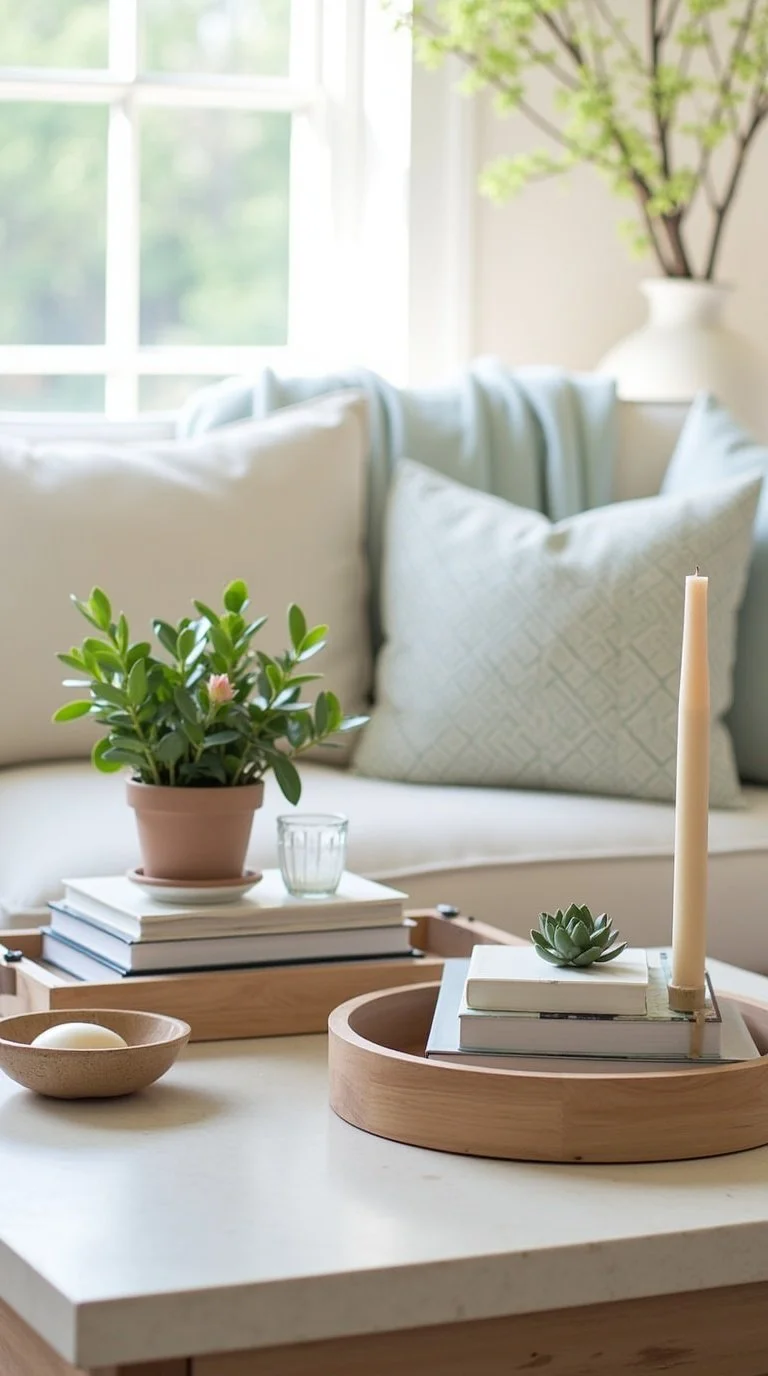
A coffee table is easy to let become a catch-all surface — mail, remote controls, unread books, candles that never get lit. Styling it well isn't complicated; it just requires a bit of intention. The formula I've settled on:
One tray to define and contain the space
A stack of 2–3 books or a small decorative bowl
Something living — a small plant, a vase of fresh flowers, or a succulent
One candle for height and warmth
One functional item — a small dish for remotes is fine; it just needs to look deliberate
The tendency is to over-style, which creates a different kind of visual noise. Restraint is the point here.
Budget-Friendly Accent Pieces
Making a living room feel refreshed doesn't require significant spending. Some of the most effective accent pieces I've found came from:
Thrift stores — solid wood side tables, interesting vases, and picture frames often turn up for a few dollars
Facebook Marketplace — genuinely underrated for furniture and décor at a fraction of retail price
Target's Threshold line — reliable quality and consistent style at an accessible price point
Free printable wall art — there are hundreds of free spring botanical and abstract prints on Etsy; printing at a local shop and framing costs under $10
One addition worth noting: if a living room feels visually heavy or dark, a light-colored area rug can anchor and brighten the space considerably. A 5x8 rug from Ruggable or IKEA's VINDUM typically runs $100–$200 and has an outsized effect on the overall feel of the room. For more room-by-room visual inspo, our spring table decor ideas guide pairs well with this section.
Bring the Outdoors In: Spring Plants and Botanical Décor
Adding plants to a home is one of the most effective spring refresh strategies — and not just for aesthetic reasons. Biophilic design, the practice of incorporating natural elements into living spaces, has been studied for its effects on wellbeing. Research published in the Journal of Physiological Anthropology found that interacting with indoor plants reduces both physiological and psychological stress. A room with plants simply feels different than one without them.
I'll be straightforward: I've struggled with keeping plants alive over the years. It took some time to identify which varieties actually work with my level of attention. Once I did, adding greenery became one of my go-to seasonal updates. For a deeper dive into using plants and nature as a creative backdrop — including outdoors — our spring garden inspiration guide is a great companion read.
Best Low-Maintenance Plants for Spring
If you've had difficulty with plants in the past, start with varieties that are genuinely forgiving:
Pothos — grows in almost any light condition, needs watering only every 1–2 weeks, and grows quickly enough to feel rewarding
Snake plant — tolerates low light and irregular watering exceptionally well; one of the most resilient houseplants available
ZZ plant — another low-light option with attractive, architectural leaves; well-suited to rooms that don't get much sun
Peace lily — useful for low-light spaces and has the helpful habit of visibly drooping when it needs water
Rubber plant — large, glossy leaves that make a strong visual statement; does well in medium to bright indirect light
For seasonal color, potted tulips, daffodils, and hyacinths are widely available at grocery stores and garden centers for $5–$10 per pot. They have a limited lifespan indoors, but the color and fragrance they add for a few weeks is well worth the cost.
The Kitchen Windowsill Herb Garden
A kitchen windowsill herb garden is one of those projects that manages to be practical, decorative, and genuinely satisfying all at once. You need a south- or east-facing window for adequate light. Small terra cotta pots — about $1 each at most garden centers — work well, and a tray underneath keeps things tidy while adding a finished look.
Good herbs to start with indoors:
Basil — fast-growing, aromatic, and useful in everyday cooking
Mint — nearly impossible to kill, and fresh mint on hand is a small but real quality-of-life improvement
Chives — easy to grow and ready to snip into eggs, salads, or soups
Parsley — slower to establish but forgiving and versatile
Styling Tips for Grouping Plants
A single plant on a shelf can look a bit arbitrary. A thoughtful grouping creates something that reads as intentional design. A few principles worth following:
Combine plants of varying heights — tall, mid-height, and trailing varieties work well together
Mix pot materials for texture — terra cotta, ceramic, and woven baskets complement each other naturally
Use plant stands, stools, or stacked objects to vary the levels
Group in odd numbers (3 or 5) — these arrangements tend to look more natural than even groupings
On the question of faux versus real: high-quality faux plants have improved significantly in recent years. For rooms with very limited natural light, a realistic-looking faux plant is a reasonable choice. The goal is a space that feels alive — how you get there is secondary.
Spring Bedroom Refresh: Create Your Own Seasonal Sanctuary
The bedroom is the one room that's entirely your own, and it tends to get less decorating attention than shared spaces. But the condition of your bedroom has a direct effect on sleep quality and how you start each morning. A spring refresh here isn't just aesthetic — it's functional.
If you have a new baby at home, it's also worth pairing this with our guide on spring baby sleep schedule changes, which addresses how the shift in light and temperature affects little ones too.
The single most impactful change you can make is updating your bedding. Heavy flannel sheets and thick comforters make sense in January. By spring, they work against you — both in temperature regulation and in the visual weight they add to the room.
Spring Bedding: What to Look For
For spring, breathable fabrics are the priority. A few options worth knowing:
Linen sheets — regulate temperature well in both warm and cool conditions, and soften with each wash
Percale cotton — crisp and cool with a matte finish; a particularly good option if you tend to sleep warm
Lightweight duvet inserts — for spring, aim for a fill power in the 400–600 range rather than the 700–800+ you might use in winter
For color, keeping bedding in soft neutrals — white, warm cream, or light natural tones — creates a clean base. Color can be added through pillowcases or a folded throw at the foot of the bed. It's a straightforward formula that holds up well visually.
Mid-range brands worth considering: Brooklinen (percale and linen), Parachute (linen), and Target's Threshold performance sheets for a more budget-conscious option at under $50 per set.
Nightstand Styling
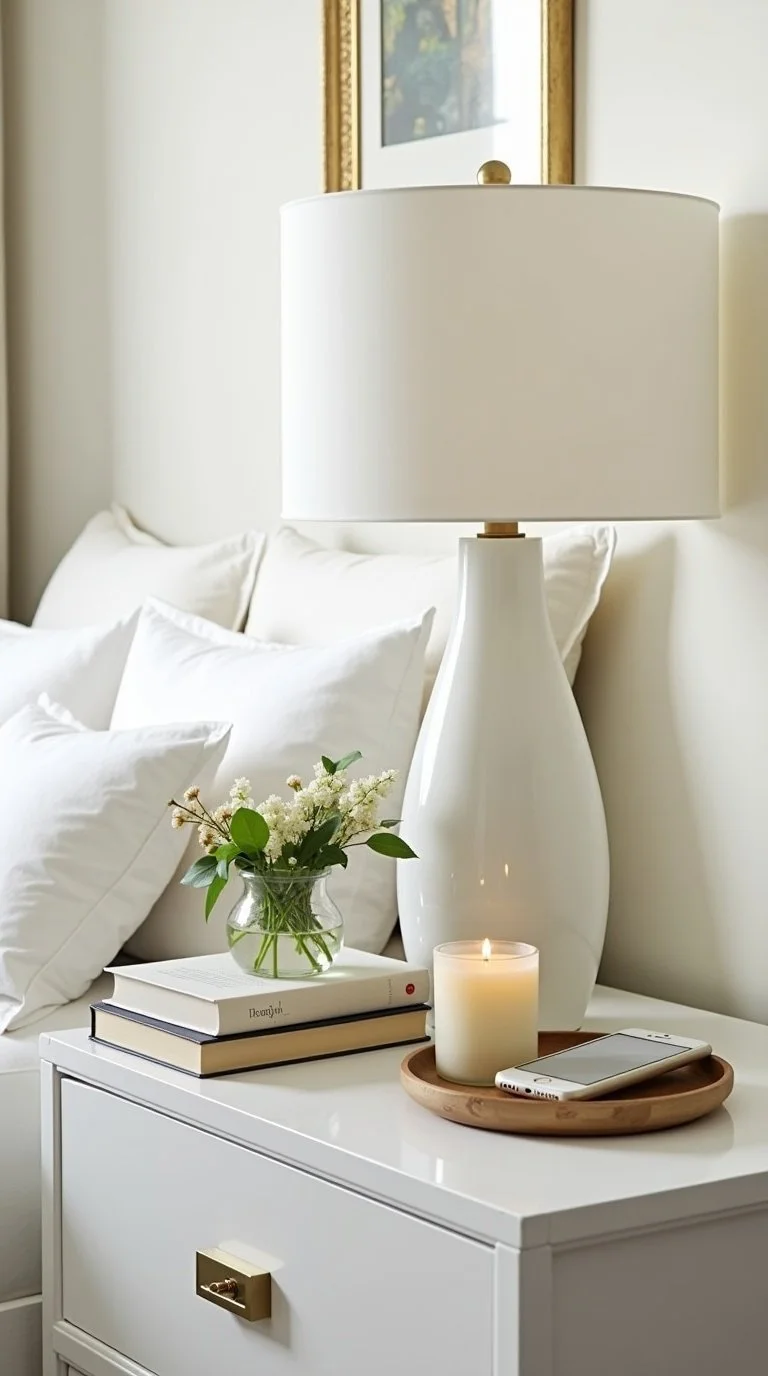
A cluttered nightstand affects the overall feel of a bedroom more than people often account for. A simple approach works better than a complicated one:
One lamp with a warm bulb — 2700K is a good target for relaxed evening light
A small vase with fresh or dried flowers
One book — the one you're actually reading, not a stack of aspirational titles
A candle — for spring, lighter scents like jasmine, fresh linen, or light citrus work well
A small tray or dish to organize the practical items: phone, chapstick, whatever you keep nearby
The restraint matters. A nightstand styled with five intentional items reads as calm. The same surface with fifteen things reads as clutter, regardless of how nice each individual item is.
Closet Organization as Part of the Bedroom Refresh
A disorganized closet creates a low-level stress that begins each morning before you've made a single decision. A seasonal transition is a natural time to address it. What I do each spring:
Move winter items — heavy sweaters, coats, thick trousers — to higher shelves or under-bed storage
Bring spring and summer clothing forward so it's the most accessible
Do a quick donation pass: anything not worn this past winter is a candidate to go
Make sure what remains has a clear, visible place
This doesn't require a closet system or any significant investment — just an hour and a clear intention. If you're dressing a growing bump this season, our spring maternity style trends guide is a nice complement to this closet reset.
The Role of Scent in a Bedroom Refresh
Scent influences how a room feels in ways that are easy to underestimate. For spring, the shift is from heavier winter fragrances — vanilla, amber, cedar — toward lighter, cleaner ones:
Fresh linen or clean cotton — subtle, widely appealing, and makes a room feel well-maintained
Jasmine or gardenia — floral without being heavy
Eucalyptus or mint — clean and slightly energizing
Light citrus — bergamot or grapefruit add a sense of brightness without being overpowering
A diffuser, a candle, or simply fresh flowers on the nightstand can accomplish this shift. A quality candle from Target or TJ Maxx runs $12–$18 and has a noticeable effect on how the room feels to be in.
Kitchen and Dining Room Updates for a Bright Spring Vibe
The kitchen is an easy room to overlook in a seasonal refresh, which is a missed opportunity. Most people spend a significant portion of their day in or around the kitchen, and small updates here can change the daily experience of the space more than similar changes elsewhere.
One of the highest-impact, lowest-effort kitchen updates is swapping cabinet hardware. Replacing outdated knobs or pulls with something in matte black, brushed gold, or ceramic takes about 30 minutes and typically costs $30–$80 depending on how many pieces you're replacing. The visual effect is disproportionate to the effort and cost involved.
Spring Counter Styling
Kitchen counters benefit from intentional editing — removing what doesn't need to be there and keeping what remains purposeful and visually consistent. For spring, a simple counter arrangement might include:
A bowl of seasonal produce — lemons, limes, or clementines serve a dual purpose as both decorative and practical
A small potted herb or a simple vase of flowers — adds life without taking up much space
Coordinated dish soap and hand lotion — visible items near the sink that work together visually make the area feel more considered
One cookbook propped open — adds personality and is actually useful
What generally doesn't need to live on the counter: mail, expired vitamins, random utensils, small appliances that are used infrequently. Clear surfaces make a kitchen feel larger and easier to work in.
Speaking of the kitchen — if you're stocking it with intention this season, our guides on spring meal prep ideas, healthy spring lunch ideas, and seasonal spring produce recipes are worth bookmarking alongside this one.
Spring Dining Table Centerpieces
An effective centerpiece doesn't require a significant investment. A few approaches that consistently work:
A simple vase of grocery store tulips — a bunch runs about $8 and lasts 7–10 days
A wood cutting board layered with a candle, a small plant, and a linen napkin — looks intentional and costs nothing if you have these things already
A terracotta pot with a small herb or succulent — brings a garden-to-table quality to the space
A shallow bowl with seasonal fruit or decorative eggs — effective for early spring in particular
For even more ideas along these lines, spring table centerpiece ideas is a beautifully curated resource. Updating dining linens — placemats and cloth napkins — is another easy swap. Linen or cotton options in warm white, sage, or natural tan give the table a fresh look without requiring new dishes or furniture.
Kitchen Linens
New dish towels have a surprisingly visible effect on how a kitchen looks and feels. If yours are faded, stained, or worn, replacing them in spring with fresh options — striped cotton, solid sage green, or natural linen — is an inexpensive update that signals care for the space. Target, Amazon, and H&M Home all carry good options in the $20–$40 range for a small set.
Outdoor and Curb Appeal: Spring Refresh for Your Home's Exterior
Curb appeal matters more than it's often given credit for — not just for resale value, but for how you feel arriving home each day. After a winter of dormancy, most home exteriors could use some attention, and the returns on outdoor spring updates tend to be significant relative to the time and cost involved.
The most efficient place to start is power washing. If you don't own one, Home Depot rents them for around $40 for a half-day. Running one over the driveway, front walkway, porch, and siding removes an entire season of accumulated grime and makes surfaces look noticeably renewed.
Front Door: First Impressions Matter
The front door is the visual focal point of a home's exterior. A fresh coat of paint is one of the most effective single improvements you can make to curb appeal, and it's accessible to most skill levels. A quart of exterior paint runs about $20–$30 — enough for a standard front door with one coat of primer and two finish coats.
Front door colors resonating in 2026:
Deep hunter green — classic and versatile; works well against most exterior finishes
Navy blue — clean, sophisticated, and widely appealing
Terracotta or rust — warm and distinctive, particularly effective against white or tan exteriors
Matte black — consistently strong, particularly for modern or craftsman-style homes
Warm yellow or coral — a more expressive spring statement for those who want something distinct
Beyond paint, updating door hardware — handle, knocker, house numbers, and doorbell surround — can run $50–$150 total and meaningfully elevates the overall impression the entrance makes.
Front Porch Styling
A few well-chosen elements can make a front porch feel genuinely welcoming without a significant investment:
An outdoor rug — even a $30–$50 option from Target or HomeGoods defines the space and makes it feel intentional
Two matching planters flanking the door — petunias, geraniums, or impatiens are reliable spring choices and widely available
A seasonal wreath — spring options typically include florals, greenery, or soft botanical elements
A lantern or two — solar-powered options require no wiring and add warmth in the evening
A small seating element if space allows — even a single chair with a cushion creates a sense of welcome
Backyard and Patio for the Outdoor Season
Spring is a natural time to assess how you want to use your outdoor space through the warmer months. Cleaning patio furniture is the first step — wipe surfaces down, check cushions for mildew (common after winter storage), and determine what needs replacing versus what just needs cleaning.
If you're envisioning your outdoor space as a true gathering spot this season, pair this section with our backyard spring refresh guide and spring outdoor entertaining ideas — both go deeper on furniture arrangements, lighting, and hosting setup.
Outdoor lighting is worth particular attention. String lights remain one of the most effective ways to make an outdoor space feel finished and usable after dark. A strand of outdoor globe lights — available on Amazon for $25–$35 — draped over a fence or pergola extends the hours you spend outside meaningfully. Solar-powered options eliminate the need for a nearby outlet.
Budget-Friendly DIY Spring Refresh Projects Anyone Can Do
Not every spring update needs to be purchased. Some of the most satisfying changes are the ones you make yourself, and they tend to have more staying power than anything bought off a shelf. That said, some DIY projects are genuinely approachable, and others are more difficult than they appear. I've experienced both.
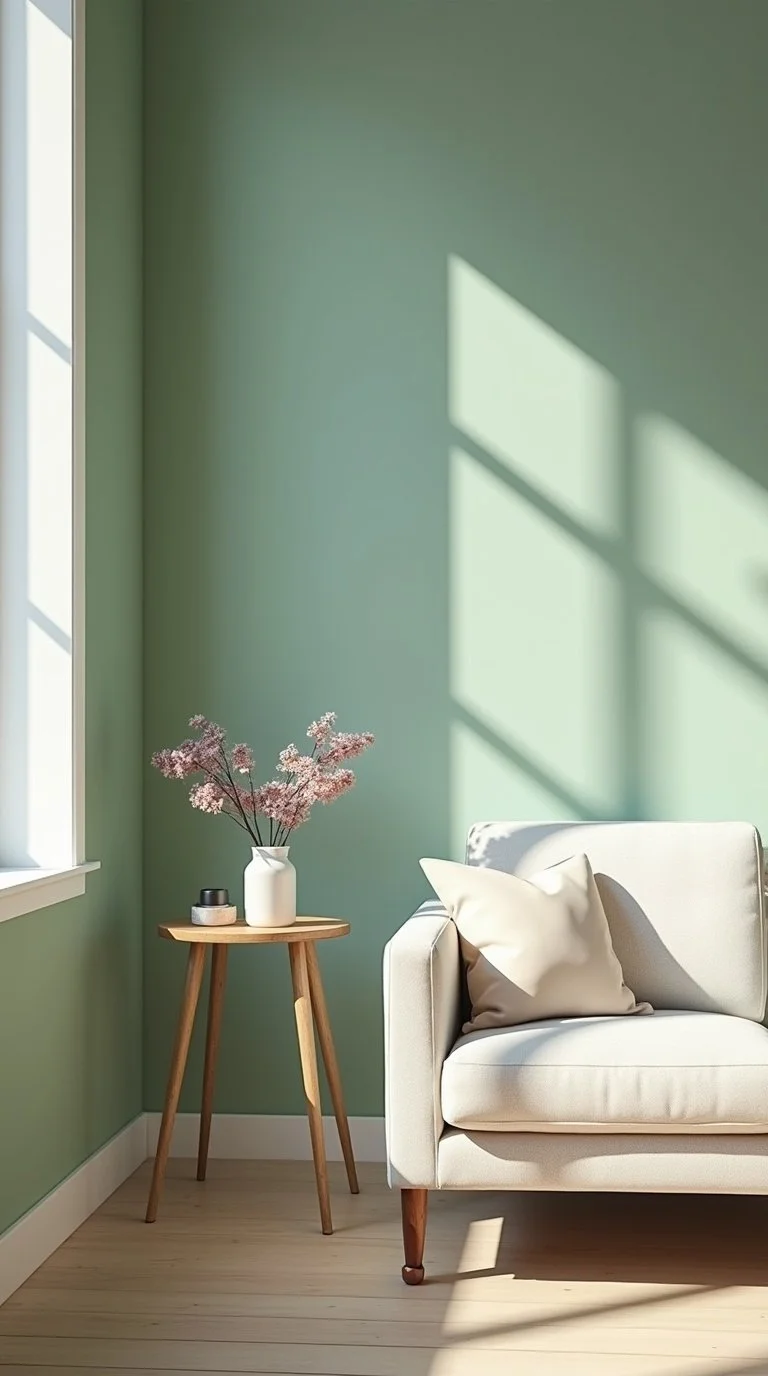
The accent wall is one of the best returns on effort in DIY home improvement. Paint costs roughly $25–$50 per gallon, and a single gallon is typically enough for one wall. Choose a wall that already serves as a natural focal point — behind the bed, behind the sofa, or the wall facing the entryway. For a broader visual mood board to inspire color and texture choices, our romantic spring mood board and soft surreal spring aesthetic guides are worth browsing before you commit to a color.
Accent Wall Tips
A few things worth knowing before you start:
Preparation matters more than the painting itself — wipe the wall down, fill nail holes with spackle, sand smooth, and tape carefully
Use Frog Tape rather than standard painter's tape — it produces a significantly cleaner edge
Two thin coats instead of one thick one — thick coats are prone to dripping and uneven drying
Use a roller for the main surface and a brush for edges and corners — don't try to roll into tight spaces
For spring, effective accent wall colors include warm sage green, dusty blue, soft terracotta, and deep forest green. These feel seasonal without being so trendy that they'll look dated quickly.
Upcycling Furniture with Chalk Paint
Chalk paint is one of the more forgiving DIY materials available — it requires minimal surface preparation, adheres well to most surfaces, and dries to a clean matte finish. A quart runs $18–$25 and covers most small-to-medium furniture pieces. Seal with a clear wax or matte topcoat for durability.
Good candidates for chalk paint:
Thrifted dressers or side tables that need updating
Mismatched dining chairs that you want to unify as a set
Small accent pieces that feel dated but are structurally solid
The results are typically better than expected for the level of effort involved, which is part of what makes it one of the more rewarding DIY projects to start with.
DIY Gallery Wall
A gallery wall is more approachable than it looks. The slight imperfection in the arrangement is part of what gives it a lived-in, authentic quality. A workable process:
Collect frames from thrift stores; if they don't match, paint them all the same color to create cohesion
Choose artwork — free botanical or abstract printables from Etsy, personal photographs printed at CVS or Walgreens, or pages from coffee table books
Lay the arrangement out on the floor before committing to the wall
Trace each frame on kraft paper, cut it out, and tape the paper templates to the wall to test the arrangement
Use Command strips for smaller frames to minimize wall damage
For spring, botanical prints, watercolor florals, and soft abstract compositions work particularly well. These feel seasonal without being overly literal.
If you have little ones, involving them in the process can be magical — our spring handprint crafts for babies and spring crafts for toddlers guides have sweet project ideas that could even become part of the gallery itself.
Final Thoughts
A spring home refresh is one of those projects where the payoff tends to exceed the effort — especially when you're deliberate about where you focus. The goal isn't a perfect home or a room that looks like a magazine photo. It's a space that feels cared for, a little lighter, and more suited to the season you're actually in.
I'd encourage you to start with one room, or even one corner of one room. Declutter it. Clean it thoroughly. Make one or two intentional changes. See how it feels. That experience of a space that's been genuinely refreshed is motivating in a way that's hard to replicate from a list of ideas — it tends to carry you naturally into the next room.
Spring is a reliable reminder that environments respond to attention. Your home isn't finished, and that's fine. It's a place that grows and shifts with you. Give it some time this season, and it will give that energy back.
