40+ Spring Garden Inspiration to Transform Your Outdoor Space
Spring has a way of making you want to be outside. There is something deeply satisfying about watching a garden come back to life — the first crocus pushing through cold soil, the smell of fresh earth after rain, that quiet sense of possibility that comes with the season.
Recent industry data shows Americans spend more than $50 billion annually on lawn and garden products, and demand is strongly seasonal, with peak activity in spring. That pull toward the garden when the days grow longer is something most gardeners understand well — but knowing where to start is a different story.
As a mom of five, getting my kids involved in the garden has become one of our favorite spring traditions — and it has taught me a lot about what actually works versus what just looks good on Pinterest. I put this guide together to make it easier, so you can find the right spring garden inspiration for your space, whether that is a sprawling backyard or a modest patio.
This post may have affiliate links, which means I may receive commissions if you choose to purchase through links I provide (at no extra cost to you). As an Amazon Associate, I earn from qualifying purchases. Read more about these links in my disclaimer policy.
Top Spring Garden Themes and Styles Inspiration for 2026
Choosing one clear theme and building intentionally around it makes a noticeable difference in how a garden comes together. Trying to blend too many styles at once tends to produce a space that feels scattered rather than cohesive — something I have learned firsthand more than once.
In 2026, the most popular garden styles reflect a broader shift toward spaces that feel personal, sustainable, and genuinely lived-in. If you are still searching for the overall spring aesthetic 2026 that suits your home, these are the styles generating the most interest this year:
Cottage Garden Style
Romantic, layered, and low-maintenance once established. The key is plant layering: tall species at the back such as delphiniums or hollyhocks, medium plants in the middle like peonies and salvia, and low-growing varieties at the front including catmint and hardy geraniums. This style is forgiving of imperfection, making it a solid choice for gardeners who want high visual impact without a rigid maintenance schedule.

Modern Minimalist Garden
A minimalist garden works through restraint — clean lines, a limited plant palette, and deliberately open space. Structural plants like ornamental grasses, clipped boxwoods, and architectural agaves work well here. Starting with no more than three or four plant varieties and resisting the urge to fill every gap tends to produce the best results.
Pollinator-Friendly Garden
Designing for bees, butterflies, and hummingbirds produces some of the most visually dynamic gardens possible. Plants that pollinators favor, including coneflowers, native salvias, black-eyed Susans, and lavender, tend to be tough and long-blooming. Research from the Xerces Society shows that even a modest patch of pollinator plants can meaningfully increase local bee populations.
Other Styles Worth Considering
Japanese-inspired zen garden: Raked gravel, moss, boulders, and minimal planting — well-suited for smaller or urban spaces
Wildflower meadow: Naturalistic and cost-effective once established; best for large, sunny areas. For more nature-forward ideas, see our guide to wild garden ideas
Potager (kitchen garden): A French-style approach mixing edibles and ornamentals in a structured, decorative layout
Woodland garden: Ideal for shaded spaces; hostas, ferns, astilbe, and bleeding heart all perform beautifully in lower light
Gardens also do not have to commit rigidly to a single style. Many successful spaces blend two complementary approaches, such as a cottage-style planting scheme with a more structured patio. The key is finding a visual thread — a repeated plant, a consistent color palette, or a shared material — that ties the space together.
Spring Flower Inspiration: The Best Blooms for Color and Impact
A spring garden that holds color from March through June requires succession planting — layering early, mid-season, and late bloomers so something is always in flower. Without this approach, it is easy to end up with a garden that peaks in April and then falls quiet for weeks before summer perennials arrive.
Early Spring (March to Early April)
Crocuses: Among the first to emerge, often through frost; plant 3 to 4 inches deep in fall
Snowdrops (Galanthus): Small, white, and remarkably cold-tolerant; often bloom as early as late February
Early tulips: Varieties like Apeldoorn and Fosteriana types bloom first and hold up well in cold conditions
Hyacinths: Dense, intensely fragrant flower spikes; plant bulbs 6 inches deep in fall
Daffodils: Reliable, deer-resistant, and available in single, double, and trumpet forms
Mid-Spring (Late April to May)
Late-season tulips: Parrot, double, and lily-flowering varieties extend tulip season by several weeks
Alliums: Spherical purple flower heads on tall, slender stems — dramatic in borders and as cut flowers
Forget-me-nots: Low-growing blue flowers that weave beautifully between other plants and self-seed readily
Bleeding heart (Dicentra): Delicate, arching stems of heart-shaped flowers in pink or white
Lilacs: Technically a shrub, but the fragrance and bloom impact make them worth including in any spring garden
Late Spring (May to June)
Peonies: Long-lived perennials in single, semi-double, and bomb forms; plant crowns no more than 1 to 2 inches below the soil surface
Bearded iris: Available in hundreds of color combinations; divide every 3 to 4 years to maintain vigor
Catmint (Nepeta): Tough, pollinator-friendly, and reliably floriferous for many weeks without deadheading
Salvia 'May Night': An early-blooming perennial salvia that bridges the gap between spring and summer
When choosing a color palette, consider how colors behave in your specific light conditions. Soft pastels work beautifully in dappled shade, while bold, high-contrast combinations like deep purple alliums with orange tulips make a stronger statement in open, sunny borders. Foliage color matters too — silver, purple, and lime-green foliage plants add contrast and continuity even when nothing is in bloom.
Do not overlook companion planting as a design tool. Tulips rising through a carpet of forget-me-nots is a classic for good reason: the blue-green foliage sets off the tulip colors beautifully. Alliums planted among late tulips extend the display seamlessly, blooming just as the tulips begin to fade.
Spring Garden Layout and Design Ideas
Layout can feel like a permanent commitment, but in practice, gardens are more forgiving than most people expect. Most plants can be moved, most mistakes can be corrected, and a single season of observation tells you more about a space than any amount of planning on paper.
Before placing a single plant, spend a few days watching your space. Note where the sun falls, where shade lingers, and where water pools after rain. A well-considered layout then balances four main elements:
Focal points: Every garden benefits from at least one element that anchors the eye — an arbor, a large ornamental grass, a birdbath, or a substantial container. Without a focal point, the space tends to feel directionless.
Pathways: Even a simple stepping-stone path makes a garden feel more intentional. Paths also protect plants from foot traffic and provide access for maintenance throughout the season.
Plant layering: In borders, place tall plants at the back, medium-height in the middle, and low-growing varieties at the front. In island beds, work from the tallest plants in the center outward.
Repetition: Planting the same variety in several spots creates visual cohesion. Even one plant used repeatedly — catmint along a border edge, for example — ties diverse plantings together more effectively than adding many different species.
Raised beds are a consistently strong choice. A standard 4-by-8-foot bed is accessible from all sides without stepping in, and quality growing medium outperforms in-ground soil in terms of drainage, weed suppression, and early spring warmth. Cedar and pine are both rot-resistant and affordable for DIY builds.
For smaller spaces, vertical gardening opens up possibilities a flat planting plan cannot. A trellis or wall-mounted panel supports climbing plants and effectively doubles your growing area without expanding the footprint. Symmetrical arrangements, like matching pots flanking an entrance, create a composed look. Asymmetrical balance with one large element offset by a cluster of smaller ones achieves a similar effect with a more relaxed feel.
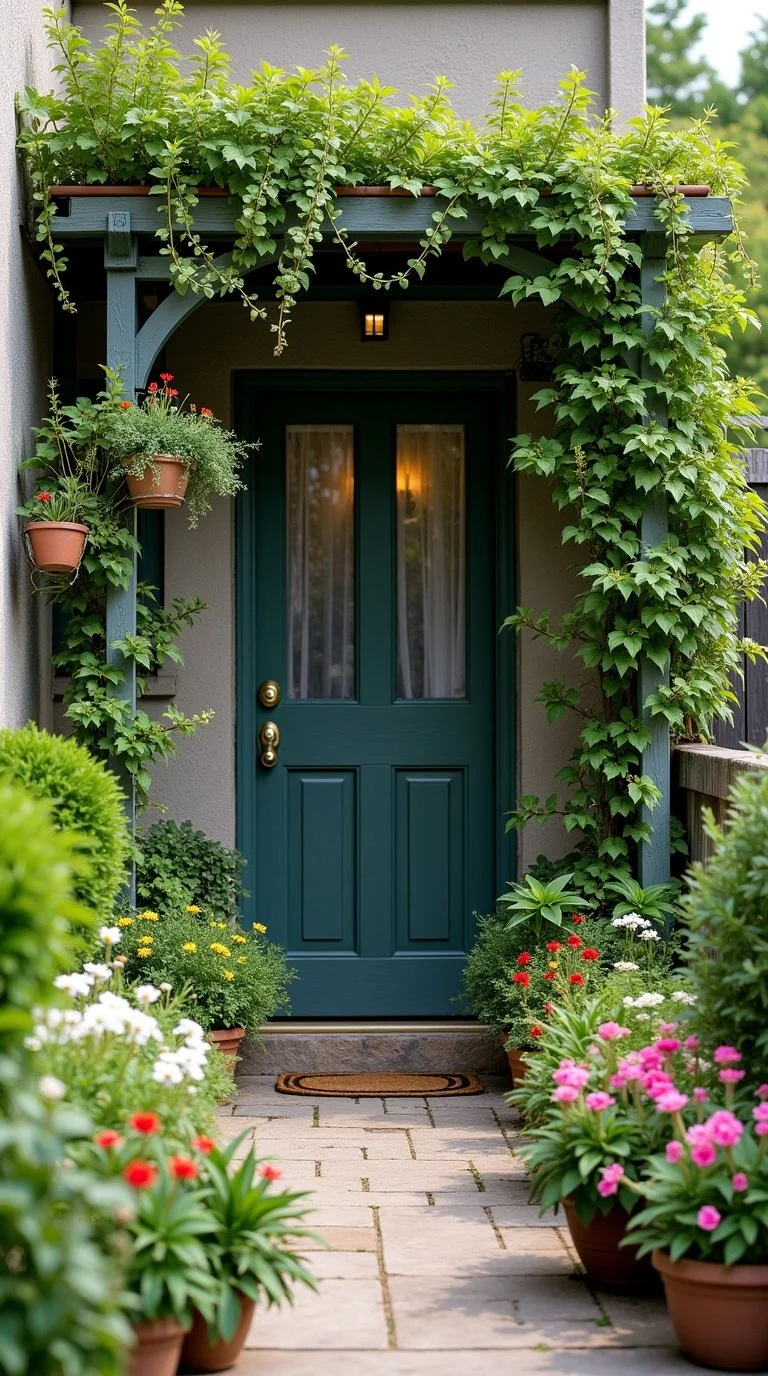
If your outdoor space extends beyond the garden beds, you might also find ideas in our guides on spring outdoor entertaining and a full backyard spring refresh.
Container and Patio Garden Inspiration for Spring
Container gardening is one of the most flexible forms of spring gardening. It requires no permanent installation, works in virtually any size of space, and allows for changes from season to season. With a thoughtful approach, a well-planted container can be as visually compelling as a full garden bed.
The most reliable framework is the thriller-filler-spiller formula. The thriller is your tall centerpiece, the filler is a medium-height mounding plant that adds volume, and the spiller is a trailing variety that cascades over the edge. These three elements together create arrangements that look considered and complete.
For spring specifically, here are some effective container combinations worth trying:
Classic spring pot: Red Darwin Hybrid tulip as the thriller, yellow wallflower as the filler, and blue lobelia as the spiller
Soft and romantic: White hyacinths with blush pansies and trailing silver dichondra
Cottage-inspired: Purple alliums rising from a base of forget-me-nots with creeping Jenny trailing at the edges
Graphic and high-contrast: Black 'Queen of Night' tulips with lime-green sweet potato vine and white alyssum
Edible and ornamental: Tall rosemary as the thriller, thyme as the filler, and creeping thyme as the spiller
Self-watering containers are worth considering if consistent plant performance matters to you. They include a built-in reservoir that wicks moisture to the root zone as needed, reducing stress from the dry-out-and-soak cycle common in conventional pots. For container selection, keeping a consistent material or finish across your pots — rather than mixing many different types — gives the overall arrangement a more composed appearance.
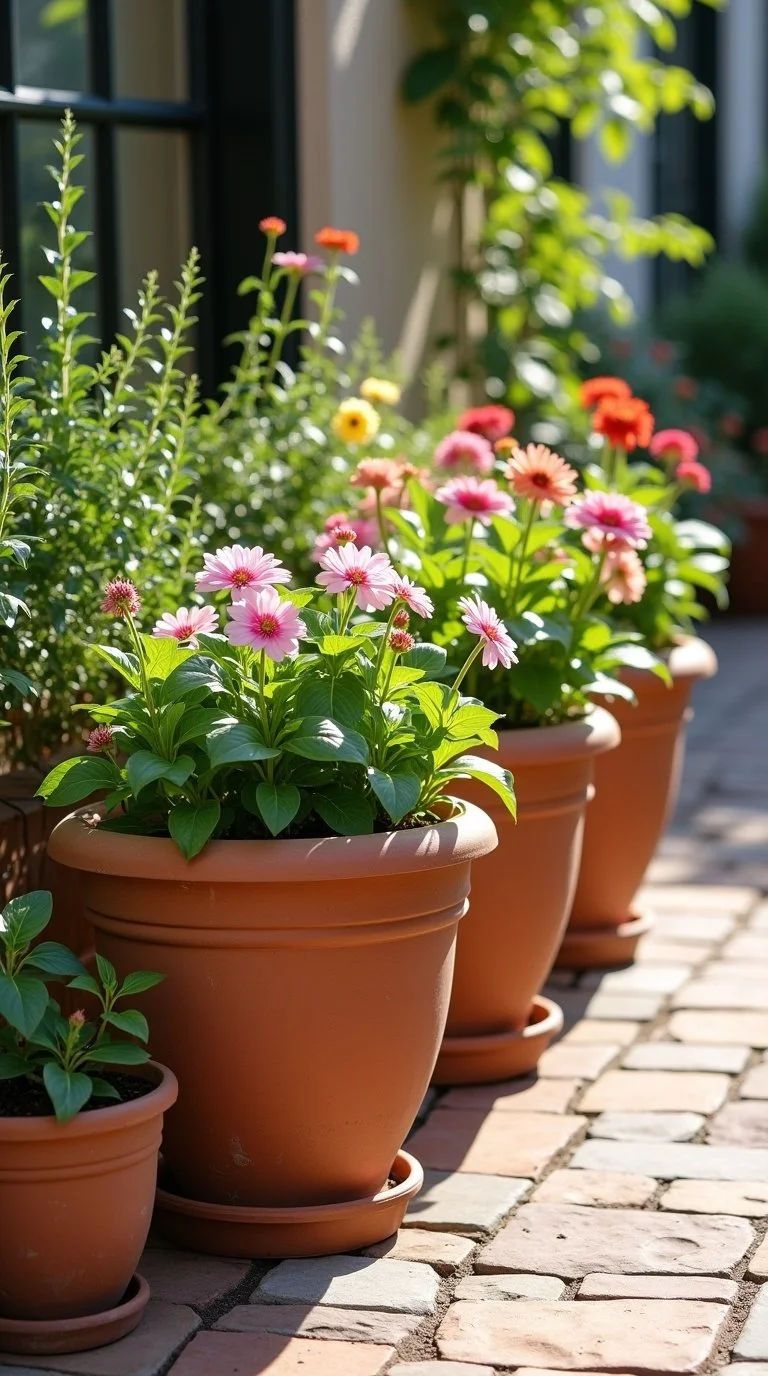
A patio refresh does not require a significant investment. A few well-planted containers, outdoor string lights, and a weather-resistant rug can transform a plain patio into a space that genuinely feels like an outdoor room. Placing fragrant plants like lavender or sweet alyssum near seating adds a sensory layer that really elevates the experience.
For more finishing touches, our spring home refresh ideas and spring table decor ideas have plenty of inspiration — and don't miss these spring table centerpiece ideas for al fresco dining setups.
Sustainable and Eco-Friendly Spring Garden Ideas
Sustainable gardening is increasingly a practical choice as much as an environmental one. Gardens built on healthy soil, appropriate plant selection, and water-conscious practices tend to be more resilient, more productive, and less demanding over time.
The no-dig method is one of the most significant shifts in home gardening practice in recent years. Instead of turning the soil each spring — which disrupts the ecosystem of fungi, bacteria, and organisms living within it — you simply layer two to three inches of compost on top of the existing bed and plant directly into it. Over time, this builds richer soil than tilling, while suppressing weeds and reducing physical labor.
Here are the sustainable practices most worth adopting this spring:
Start composting: A basic bin costs $30 to $50 and converts kitchen scraps and garden waste into free, high-quality fertilizer. The University of Illinois Extension recommends a carbon-to-nitrogen ratio of roughly 25:1 — about 25 parts dry material to every 1 part green material.
Collect rainwater: A standard rain barrel holds 50 to 80 gallons and can meaningfully offset watering costs during dry periods. Many municipalities offer rebates for rain barrel installation.
Switch to peat-free potting mix: Peat-free alternatives made from coir, bark, and compost are now widely available and perform comparably for most gardening applications.
Plant native species: Native plants require less supplemental water, fewer fertilizers, and minimal pest intervention. The Lady Bird Johnson Wildflower Center maintains a searchable database of native plants organized by state.
Create habitat features: A bee hotel ($15 to $20), a shallow dish of fresh water, and a small brush pile meaningfully increase the biodiversity of even a small garden.
Use drip irrigation: Delivering water directly to the root zone reduces evaporation by up to 50 percent compared to overhead sprinklers and reduces conditions that favor fungal disease.
Avoiding pesticides in spring is particularly important because that is when beneficial insects, including ladybugs, ground beetles, and parasitic wasps, are most active and vulnerable. When pest pressure does occur, starting with the least harmful option — hand removal, neem oil, or insecticidal soap — before escalating is a sound approach for both the garden and the local ecosystem.
For more eco-minded living ideas beyond the garden, explore our posts on eco-friendly spring home practices.
DIY Spring Garden Projects to Try This Weekend
Building something for the garden adds a dimension of personal investment that purchased items rarely replicate. It also produces features that are better suited to the space, since they can be sized and designed to fit exactly where they are needed. Not every project goes perfectly — I once built a raised bed that came out slightly off-square — but most garden builds are forgiving enough to adapt as you go.
Here are six worthwhile spring DIY projects, ordered from simplest to most involved:
Paint and upcycle old pots: Rust-Oleum 2X Coverage spray paint works well on terracotta. Make sure the pot is clean and dry before applying. Chalk paint is another good option for a matte, weathered finish.
Newspaper seed starter pots: Roll newspaper around a small can, fold the bottom closed, fill with seed starting mix, and plant your seeds. When seedlings are ready, the whole pot goes in the ground — no plastic waste, virtually no cost.
Simple jute trellis: Two wooden stakes and several lengths of jute twine strung horizontally create a functional trellis for sweet peas, cucumbers, or climbing beans. Takes about 20 minutes to assemble.
Basic raised bed: A 4-by-8-foot raised bed from untreated cedar 2-by-8 boards is an achievable weekend project. Fill with 60 percent topsoil, 30 percent compost, and 10 percent coarse sand for a well-draining growing medium.
Wicking bed from storage bins: Two stacking plastic storage bins and a length of capillary fabric produce a self-watering planter in about 45 minutes. The bottom bin holds water; the fabric wicks moisture up into the growing medium. Lettuce, herbs, and spinach perform particularly well in these.
Herb spiral: A spiral-shaped raised bed from stacked stones or bricks creates multiple microclimates in a compact footprint — drier and warmer at the top, cooler and more moisture-retentive at the base — allowing you to grow a wider range of herbs in a small space.
Secondhand and repurposed materials are also worth exploring. Old colanders make effective hanging planters with built-in drainage, vintage watering cans become unexpected focal points when planted with succulents, and wooden wine crates work well as rustic herb planters. Originality and care tend to go further than budget in the garden.
If you have little ones at home, these projects pair wonderfully with spring crafts for toddlers or spring handprint crafts for babies — a great way to get the whole family involved in the garden from the very start.
Spring Garden Color Palette Inspiration
Color is one of the most powerful tools in garden design and one of the most commonly underestimated. A garden filled with lovely plants can still feel restless if the colors are not working in harmony. A practical starting point is your home's exterior — choose a garden palette that complements those tones rather than competing with them. Our romantic spring mood board and soft surreal spring aesthetic posts are great companions if you are still defining your overall look.
Here are five spring garden color palettes working particularly well in 2026:
Classic English garden: Blush pink, soft lavender, creamy white, and sage green. Peonies, alliums, white foxgloves, and catmint create a palette that is timeless and reliably beautiful.
Bold and maximalist: Deep purple alliums with orange or coral tulips and chartreuse foliage accents. High contrast and visually memorable when approached with some restraint.
Cool and calming: Ice blue, silver, white, and soft yellow. Forget-me-nots, white narcissus, dusty miller, and pale primroses — serene and composed, particularly effective in smaller or enclosed spaces.
Warm and inviting: Peach, coral, golden yellow, and soft orange. These tones feel genuinely welcoming and work especially well in entrance gardens or near seating areas.
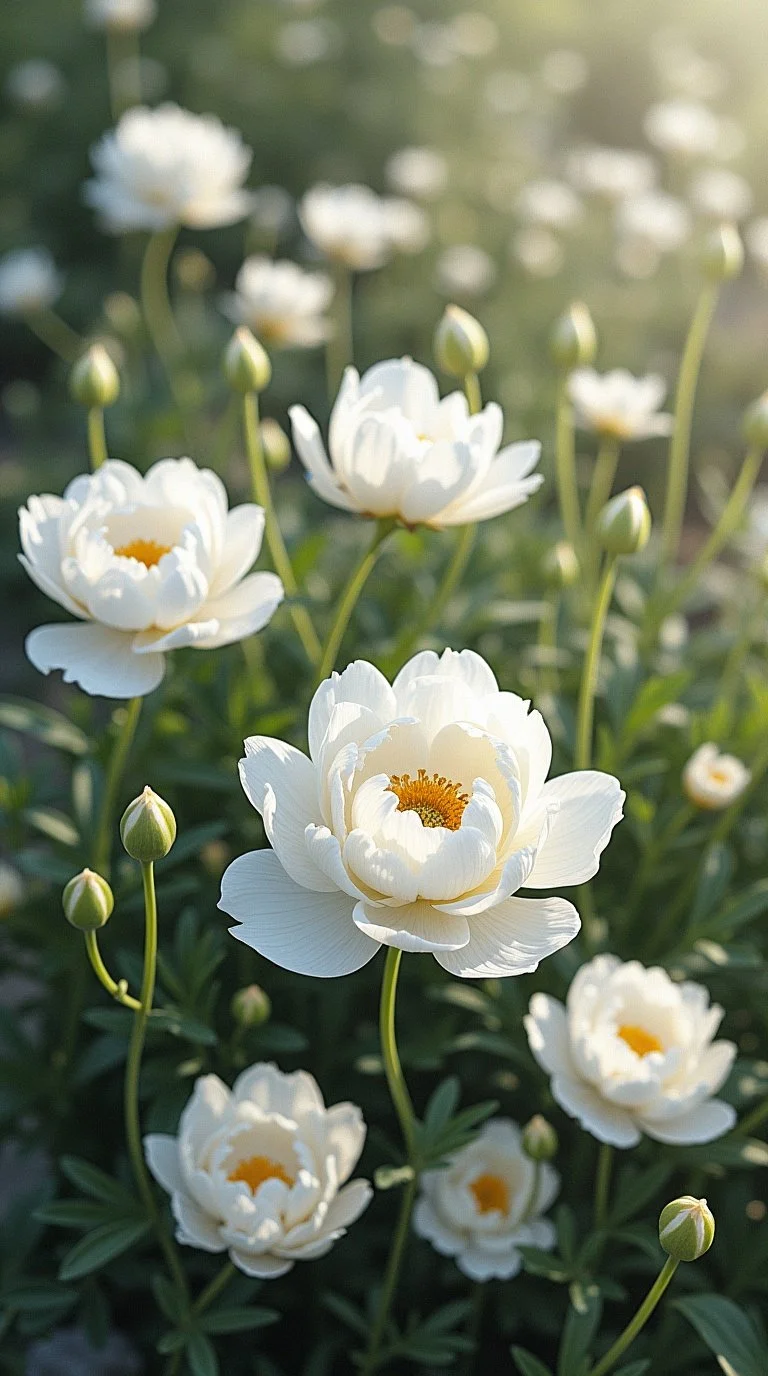
Monochromatic white: All-white and cream flowering plants with varied green and silver foliage. Sophisticated and easier to plan than it looks — design interest comes from form and texture rather than color.
Foliage color deserves as much consideration as flower color. Flowers are seasonal; foliage is present throughout the growing season. Plants with purple-toned leaves such as dark-leaved heuchera, silver foliage like artemisia, or lime-green foliage like lady's mantle contribute color and contrast even during gaps between bloom periods. Texture works similarly — pairing fine-textured grasses or fennel with bold, broad-leaved plants like hostas creates a layered visual richness that gives the garden a more considered, polished feel.
Spring Vegetable and Herb Garden Inspiration
Growing some of your own food is one of the more satisfying aspects of spring gardening. Spring is actually one of the best seasons for vegetables because of cool-season crops — lettuce, spinach, kale, peas, radishes, and broccoli — which prefer temperatures between 45 and 75 degrees Fahrenheit and can tolerate a light frost. These can go in the ground four to six weeks before your last expected frost date.
Here is a straightforward planting timeline for spring vegetables:
Direct Sow Outdoors (4 to 6 Weeks Before Last Frost)
Peas: Sow 1 inch deep and 2 inches apart along a trellis; cool soil is essential for good germination
Spinach: Fast-growing and cold-hardy; ready to harvest in approximately 40 to 50 days from planting
Radishes: The quickest vegetable to grow; most varieties mature in 25 to 30 days from sowing
Lettuce: Surface sow or lightly cover; thin seedlings to 6 inches apart once established
Kale: Frost-tolerant and actually improves in flavor after cold exposure
Start Indoors (6 to 8 Weeks Before Last Frost)
Tomatoes: Need a head start; pot up once before transplanting outside after frost risk has passed
Peppers: Even slower to establish than tomatoes; benefit from starting 8 to 10 weeks before the last frost date
Broccoli and cabbage: Transplant outdoors 2 to 4 weeks before last frost once hardened off
Basil: A warm-season herb that should remain indoors until nighttime temperatures are reliably above 50 degrees Fahrenheit
Companion planting adds both practical and visual value. Basil near tomatoes is thought to deter aphids, nasturtiums act as a trap crop drawing pests away from more valuable plants, and dill attracts beneficial predatory insects. The potager, or French kitchen garden, takes this further by arranging edibles and ornamentals together in a structured, geometric layout — a garden that produces food without sacrificing visual appeal.
Succession planting is the single most effective technique for maximizing spring harvest. Rather than planting all your lettuce at once, plant a small amount every two to three weeks throughout spring for a continuous harvest that extends for months. The same approach works well for radishes, beans, and most other quick-growing crops.
Once your spring harvest is in, you will want to make the most of it — our seasonal spring produce recipes, healthy spring lunch ideas, and spring meal prep ideas are full of practical inspiration for cooking with what you have grown.
Wrapping It Up
A spring garden, at its best, is both a personal space and a productive one. Whether your interest is in beautiful flowers, homegrown food, a habitat for pollinators, or simply a more inviting outdoor space, spring offers the conditions and the opportunity to make real progress.
The most important step is simply beginning. Not with a grand renovation, but with one intentional change — a new plant combination, a first raised bed, a shift toward more sustainable practices. Gardens develop incrementally, and the knowledge you build in one season carries forward into every season that follows.
I hope this guide has given you both the inspiration and the practical grounding to move forward with confidence. Your garden does not need to be perfect to be worth your time. It just needs to be yours, and to be growing.
